3D scanning reveals almost £10K annual savings with Volvo’s latest tooth system
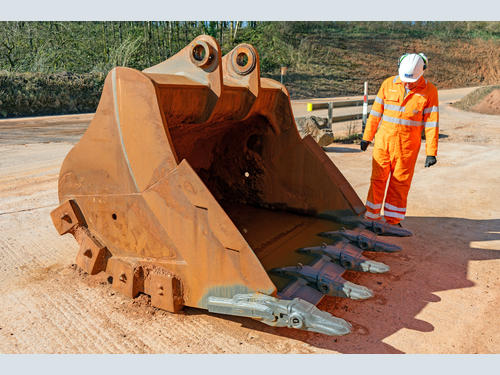
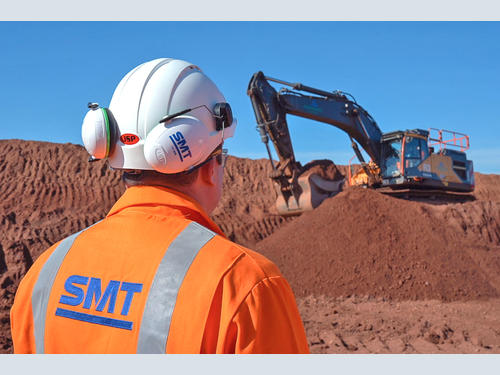
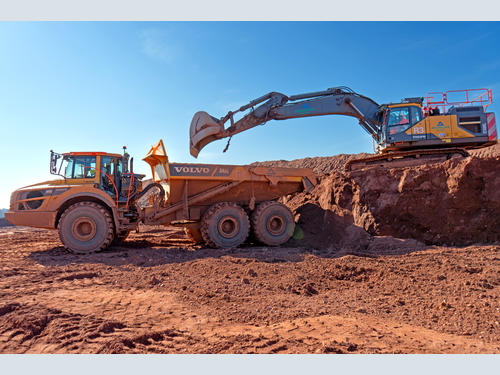
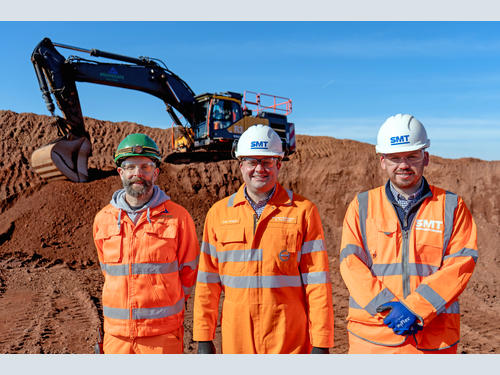
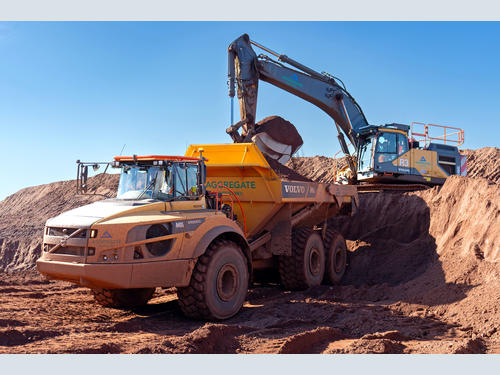


An innovative 3D scanning study by heavy equipment dealer SMT in Great Britain has quantified the real-world impact of the Volvo Tooth System 2 (VTS 2) on fuel, emissions, and component analysis – setting a new benchmark for ground engaging tool analysis.
• 10.5% reduction in total cost-per-hour.
• £9,500 approximate annual fuel saving per machine.
• 700-750 hours of operational life for VTS 2 teeth, versus 450-500 hours for the competitor.
• 15% reduction in monthly CO2 emissions.
• 30 minutes for one individual to change teeth, down from 1 hour two-man job with older competitor systems.
A rigorous field trial in the UK has demonstrated that upgrading to Volvo’s second-generation tooth system (VTS 2) can save an excavator operator approximately £9,500 annually in fuel alone, while significantly extending component life and cutting CO2 emissions.
The study, a recent endeavour between SMT Great Britain (SMT GB), exclusive Volvo Construction Equipment dealer, and customer Holcim (previously Aggregate Industries), replaced traditional wear measurement techniques with high-precision 3D laser scanning to generate indisputable data on the performance of ground engaging tools (GET) in a demanding quarry environment.
Long in the tooth
Originally launched in 2019, the Volvo Tooth System has undergone continual refinement, and been developed to offer a tailored fit for Volvo excavators and wheel loaders, ensuring optimal breakout force, uptime, and machine performance.
VTS 2 wasn’t just designed to last longer, it was engineered to do so safely. Its streamlined, hammerless locking system eliminates the risks associated with traditional pin-and-hammer installations, where replacing teeth can involve sledgehammers and seized components.
“We wanted to test Volvo’s claims in the real world,” explains James Smith, Aftermarket Business Analyst at SMT. “We wanted to prove to our customers that VTS 2 isn’t just a safer and stronger product, it also reduces fuel consumption and extends operating life.”
Having been designed from the ground up by Volvo CE over several years to produce a safer, stronger and more resilient advancement, VTS 2 is now setting new GET standards, which have now been demonstrated through intrinsic operational analysis with 3D scanning partner, Printing Portal.
Placed and analysed in real-world construction environments, the performance, safety, and sustainability of VTS 2 didn’t just pass with flying colours but announced itself as a standard-bearer for the heavy equipment industry.
Extra dimensions
The extensive trial was SMT’s first venture into performance benchmarking using advanced 3D scanning technology. The study compared VTS 2 directly against a key competitor’s product, examining wear rates, fuel consumption, and operational efficiency under controlled, yet realistic, site conditions.
To ensure precision, SMT engaged Printing Portal to measure wear patterns on the teeth. Using high-resolution laser scanning technology, the team captured millimetre-accurate models of each tooth at regular intervals throughout the trial. This approach provided previously unseen insight into wear rates, material loss, and the operational behaviours influencing tooth life.
SMT and Volvo CE worked with long-term customer Holcim to put the solution to the test.
“Holcim provided all the necessary support to facilitate the 3D scanning phase,” Sam Duggan, SMT GB Site Solutions - Business Manager, says. “The team offered stable assistance for positioning the tools, provided the power extension, and were available to carry out the work within the required timelines.”
SMT used Holcim’s Hillhead quarry in Devon as a testing ground. A Volvo EC480E excavator was fitted first with VTS 2 and later with the competitor’s teeth for a direct like-for-like comparison.
Starting in June 2024, the EC480E clocked over 240 hours per tooth set under tough quarry conditions. Regular scans of the teeth, using a FARO Laser Scanner, were performed at the end of the working week in a clean, controlled environment, captured highly accurate wear data.
Traditional wear assessments rely on basic measurements, such as tape measures, scales, or visual inspection, which often lead to premature replacements or overlooked issues. The advanced 3D scanning methods deployed in this study told a much more detailed story.
False-colour deviation maps clearly revealed how tooth shape and geometry evolved under stress, showing specific areas of accelerated wear. The scans also highlighted instances of suboptimal operator technique, subtle impacts not visible to the naked eye but capable of shortening tooth life and driving up costs.
“We were able to see through months of testing how 3D scanning is proving to be a useful tool which can improve efficiencies and reduce long term costs for the supplying of components within the industrial sector,” James adds.
Data-backed performance
Beyond the technical insights, the operational advantages were clear. Compared to the competitor tooth, VTS 2 reduced weekly fuel consumption by 4% and cut monthly CO₂ emissions by 15%. The VTS 2 teeth therefore were estimated to last between 700-750 working hours, far exceeding the competitor’s estimation of 450-500 hours. Operators also reported smoother penetration and easier material handling, reducing the need to engage high-power modes and lowering litres per hour fuel use. These factors contributed to an overall 10.5% cost-per-hour saving, equating to around £9,500 annually in fuel. Holcim’s excavator had previously run the original VTS 1 system, allowing SMT to benchmark against both the older Volvo product and the competitor’s offering.
Safety and ease of use also played a decisive role. The VTS 2’s hammerless locking system reduced changeover time from up to one-hour with two individuals (with the old welded-pin systems) to as little as half an hour completed by one individual. For Holcim this time saving wasn’t just a convenience, it was a major driver of their independent decision to fully convert their buckets to VTS 2 before the trial even ended.
“We were so impressed by the VTS 2 teeth that we took the opportunity to convert our own bucket to these teeth before we had even completed the tests,” explains Holcim Hillhead Quarry Manager Anthony Allday.
“Once we saw how quickly and safely we could swap out teeth, combined with the data showing longer life and lower fuel use, it became the obvious choice.”
A new industry blueprint
This study didn’t just validate VTS 2, it has also opened the door to new opportunities for 3D scanning in construction.
“The ability to predict wear with this level of precision has huge implications for maintenance planning, procurement, and even product design,” James adds. “We’ve already provided feedback to Volvo on potential future enhancements, including advanced coatings to extend tooth life even further.”
With proven savings, enhanced safety, and a lower environmental footprint, Volvo’s Tooth System 2 can set a new benchmark for ground engaging tools. There are plans to develop a standardised offering and subscription model, with SMT actively looking to partner with third-party suppliers to help customers proactively monitor and take care of their GET on site and look to further reduce costs and emissions. SMT is also anticipating offering 3D scanning as part of its consultation services through a third-party provider, to be utilised across the entire product range to measure wear on GET components.
Overall, for SMT, the crux of the trials’ results has been clear. VTS 2 isn’t just a better tooth, it’s a smarter investment for operators focused on cost-efficiency, sustainability, and safety.
Furthermore, the collaboration between SMT, Printing Portal, Volvo CE, and Holcim has highlighted how 3D scanning offers the heavy equipment industry a new, precise, efficient, and exciting way to assess component performance and operational condition. By capturing detailed measurements enabling accurate wear analysis and rapid inspection for damage or deformation, it can drive smarter, more economical decision-making across heavy machinery operations, and prove a key stepping stone into a brighter industrial future.