From center to road: the case for one fleet partner in waste and recycling


By Peter Bauer, Segment Leader, Building & Demolition at Volvo Construction Equipment (Volvo CE)
Waste and recycling is an industry navigating ongoing change and mounting complexity. Rising material volumes, stricter sustainability targets and legislation, labor shortages, rising fuel costs and evolving customer expectations are forcing operators to rethink how their businesses run.
Today, waste and recycling is less about managing assets and more about managing an ecosystem. The question is no longer whether they have the right truck or machine. It is how trucks, machines and digital technologies work together to support material flow, productivity and operational resilience.
Every stage affects the next
From collection and transfer to materials handling, processing and onward transport, waste and recycling operations are highly interconnected systems.
These operations can span everything from municipal waste collection and transfer to materials recycling, organics processing, scrap handling, construction and demolition waste, waste-to-energy facilities and landfill operations. Each application has its own operational requirements, yet all depend on one another. Delays, bottlenecks or inefficient processes have a significant impact on productivity.
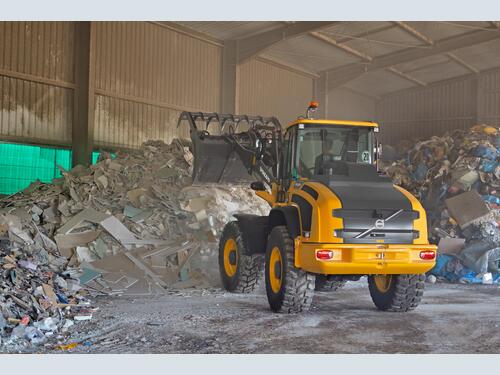
It’s also an industry that operates around the clock, with wheel loaders, material handlers, trucks and supporting equipment moving high volumes of material, leaving little room for unplanned downtime. When assets, service providers and technologies are disconnected, coordination is more difficult, increasing complexity and operational risk. Simplifying fleet management while maintaining or improving performance is becoming a key focus for operators.
At the same time, organizations are being asked to meet ever more demanding requirements around sustainability, safety, reporting and service delivery. For municipalities and large contractors in particular, simplifying procurement, service and long-term planning is a growing priority that is driving a shift in fleet strategies. Rather than trucks, machines and technologies from multiple suppliers, there is a move towards more integrated approaches.
The need for a connected operation
“Fragmented fleet management adds unnecessary complexity at a time when operators need greater simplicity, visibility and flexibility,” says Peter Bauer, Segment Leader Building & Demolition at Volvo CE. “Rather than multiple suppliers, they need a partner that can connect machines, trucks and digital solutions to make operations easier to run, easier to scale and easier to future proof.”
Digital technologies are becoming a critical tool to help manage complexity. By providing greater visibility into fleet performance, uptime, energy use, and asset utilization, digital tools can help identify inefficiencies, support maintenance planning and improve decision-making across the entire operation. They can also support the transparency and reporting capabilities now expected by municipalities and large-scale operators.
“How well trucks, machines, people and data work together matters more than ever,” says Bauer. “Operators need visibility across their operations, along with the flexibility to respond as technologies and regulations evolve.”
Flexible fleets for the transition ahead
Fleet flexibility is becoming even more important to waste and recycling operators pursuing sustainability goals.
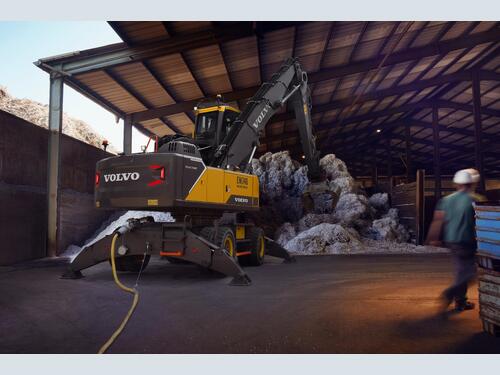
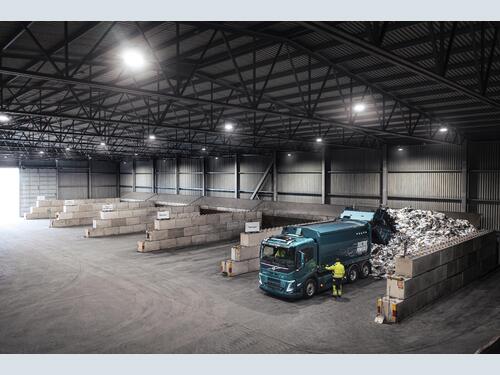
For an industry built around environmental responsibility, the transition to lower-emission operations is a natural progression. However, the shift will not happen overnight. Electric and grid-connected solutions are already proving their value in applications such as indoor recycling operations, transfer stations and urban waste collection, where reducing emissions, noise and operator exposure are priorities. At the same time, conventional equipment will continue to play a key role. The challenge is in creating a fleet that can evolve over time without compromising productivity.
“Operators are looking for practical ways to introduce electrification,” says Bauer. “They want the flexibility to introduce electric machines and trucks where they deliver the greatest operational, commercial and environmental benefits, while continuing to meet the performance demands of the site.”
High levels of machine and truck utilization also make service support critical. In these environments, productivity depends on fast work cycles, reliable equipment and rapid support whenever issues arise. As a result, many operators are placing greater value on partners that can provide consistent service, technical expertise and long-term support across both trucks and machines through a single support network.
Similarly, safety remains a critical consideration, particularly in recycling environments where machines, trucks and people work closely side-by-side. As facilities become busier and more complex, technologies that improve visibility, situational awareness, safe material handling and operator confidence are essential.
The case for one fleet partner
As waste and recycling operators balance productivity, sustainability, safety and uptime requirements, interest is growing in fleet strategies that bring machines, trucks, digital solutions and service support together under a single operational framework.
“We see a growing need for solutions that connect operations from center to road,” says Bauer. “As the only OEM able to bring together construction equipment, trucks, digital solutions and both conventional and electric technologies within a single fleet ecosystem, Volvo is uniquely positioned to help waste and recycling operators simplify complexity, increase resilience and prepare for the future.”