From the North West to Barcelona: Armstrongs Group Stone Helps Sagrada Família Reach Full Height


Lancashire quarry plays part in global milestone as Gaudí’s iconic basilica reaches its highest point after 144 years...
Stone sourced from a quarry in the Lancashire countryside has helped shape one of the world’s most iconic landmarks, as Barcelona’s Sagrada Família reaches its final height for the first time in its 144-year history.
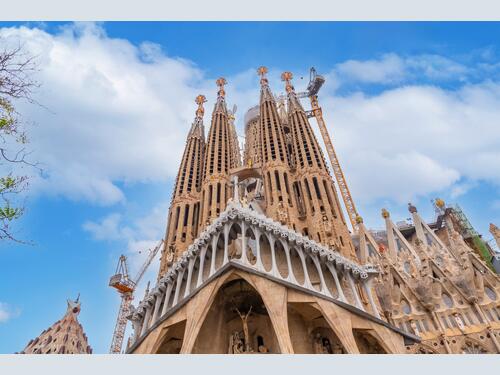
The basilica, designed by renowned Catalan architect Antoni Gaudí, recently reached 172.5 metres following the installation of the cross atop the central Tower of Jesus Christ, making it the tallest church in the world.
The milestone marks a significant step towards the project’s long-anticipated completion, expected to coincide with the centenary of Gaudí’s death.
Behind this global achievement is a connection much closer to home…
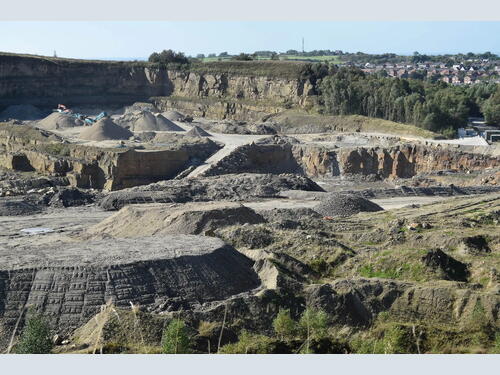
Armstrongs Group, based in the North West, has been supplying specialist sandstone from its Brinscall Quarry near Chorley to support the ongoing construction of the Sagrada Família. The stone was selected following a worldwide search to find a suitable match for the original materials used on the basilica’s historic facades.
With the original Montjuïc quarries in Barcelona long exhausted, architects and engineers were faced with the challenge of sourcing stone that met both the structural and aesthetic requirements of Gaudí’s design. The distinctive sandstone from Brinscall Quarry was identified as a close match, allowing construction to continue in line with the building’s original vision.
Unlike standard quarrying operations, the extraction process for the Sagrada Família stone requires exceptional precision.
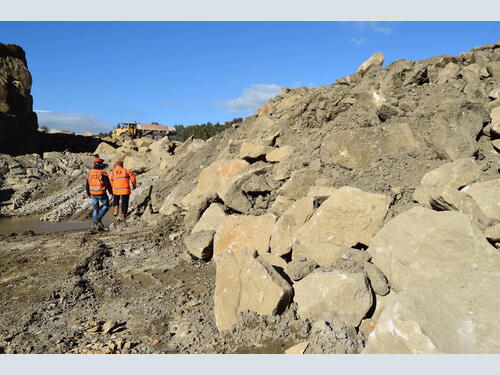
At Brinscall Quarry, Armstrongs’ team carefully dislodges large sections of pristine sandstone using specialist machinery, avoiding blasting methods to maintain the integrity of the material. Each piece is handled with care before being transported to the company’s stone workshop, where it is cut to reveal a cross-section for assessment.
This process allows architects in Barcelona to examine both the structural quality and the unique beige colouring of the stone.
Once approved, the stone is shipped to Spain, where it is further shaped and integrated into the fabric of one of the most recognisable buildings in the world.
A spokesperson for Armstrongs Group said: “To play a role in a project as significant as the Sagrada Família is something we’re incredibly proud of. It’s not every day that materials from a Lancashire quarry become part of a global landmark.
“There’s a real sense of pride knowing that stone from Brinscall is helping to continue Gaudí’s vision and that a piece of Chorley will remain part of this structure for generations to come.”
Construction of the Sagrada Família began in 1882, with Gaudí dedicating the latter part of his life to its design before his death in 1926. Despite interruptions over the decades, progress has accelerated in recent years thanks to advances in engineering and technology.
Today, the basilica attracts millions of visitors annually and stands as one of Europe’s most ambitious architectural projects, built through the work of generations of craftsmen, engineers, and materials sourced from across the world.
For Armstrongs, the project represents a unique intersection of local industry and global heritage.
As the Sagrada Família now defines Barcelona’s skyline at its full height, it also carries with it a lasting connection to the North West of England, a reminder that even the most internationally celebrated landmarks can have roots in places closer to home.