Kleemann │ Scalpers and classifying screens: basic principles and differences
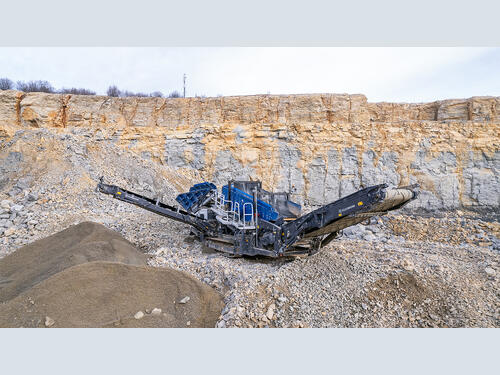
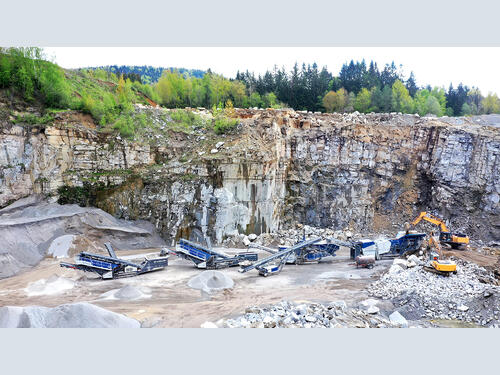


Mobile screening plants show their particular strengths in both line-coupled and standalone materials-processing scenarios.
For a long time, the focus in mobile processing of quarried stone and recycling materials was firmly set on the use of crushing plants. Although these were able to produce aggregates that could be influenced within certain limits, these were only saleable to a limited extent without classification by downstream screening plants. In contrast, scalpers and classifying screens can separate materials into several final products and produce qualified final products. These plants don’t necessarily need to be used in combination with crushing plants, as they also show their strengths in standalone materials-processing scenarios. A distinction is made between two groups of screening plants: scalpers and classifying screens
Scalpers – the preparers
The main task of scalpers, also frequently called scalping screens or heavy-duty screens, is the sorting of the coarse feed material before it is passed to the preliminary crushing stage. As the name suggests, they are fed with coarse material and ‘scalp’ off the oversize content. The material loaded into the feed hopper is passed directly to the upper screen deck. The oversize grains are passed over the screen deck in the material flow direction and onto the main discharge conveyor. This enables the scalper to handle even the largest chunks of material.
The plants are often fed with material either from the side or from the rear with a wheel loader. Separate folding hopper filling aids are available as an option and enable the loading of feed material from the rear with wider loader buckets or prevent material spillage over the far side of the hopper when loading from the side.
The versatile scalpers can also be used as a classifying screen in a plant train, where they can screen out up to three fractions from the crushed stone. To enable this, the rear hopper wall of the Kleemann scalpers can be folded to at least two different heights, and even to three heights in the case of the MOBISCREEN MSS 802 EVO. This enables optimum material transfer, even at the low feed height of an upstream crusher.
For special applications: Equipment for increased durability.
In certain situations, the factory-fitted standard conveyor belt of the feeding conveyor of Kleemann scalpers is pushed to its limits. For example, extremely coarse and sharp-edged feed material can cause damage to the conveyor belt. In the case of flaky, clay-bonded rock, the smooth belt can slip underneath the feed material, particularly when it is extremely moist. To avoid such complications, scalpers can be fitted with a robust apron feeder. In addition, material brakes and/or chain curtains can be installed on the feed and discharge sides of the screen casing to avoid damage to, or a reduction of, the durability of the main discharge conveyor belt caused by unhindered impacts of coarse stone fragments.
Classifying screens – the refiners
Classifying screens are the specialists for the production of high-quality final products or important intermediate products. This is where finer, usually pre-crushed, material in smaller pieces is processed. Classifying screens are essential components in multi-stage crushing and screening scenarios, but are used just as often as standalone screening plants.
The MOBISCREEN MSC EVO line classifying screens from Kleemann all have a feed hopper with a particularly large capacity. The feed material is loaded into them by wheel loaders, excavators or an upstream crusher or screening plant. With its wider opening at the top, the hopper here ensures a good material flow. As classifying screens are usually fed with finer material, they do not require as much in the way of impact or wear protection as scalpers.
The material flow is decisive
The material flow determines the throughput and the final result, which must be precisely classified. The demands on the material flow begin as soon as material is fed to the plant: For instance, the speed of the feeding conveyor has a direct influence on the bed height on the various decks of the screen casing. Should the bed height on one of the screen decks become too high, the quality of the screened material begins to deteriorate immediately. Achieving excellent screening results from a classifying screen is ultimately the result of a complex interplay between the speed settings of the hopper discharge conveyor and the feeding conveyor, the setting of the dosing flap, the position of the feeding conveyor relative to the screen casing, the setting of the impact plate, the angle and amplitude of the screen casing and the right choice of screen media. There are fewer influencing parameters in the case of a scalper, as the quality requirements for the screened material are generally less critical than for a classifying screen. In the case of these plants, the screening result can be influenced by the speed of the feeding conveyor, the angle and amplitude of the screen casing and the choice of the right screen media.
The screen casing and screen media
The choice of the right screen media for a screening plant is decisive for the achievement of the desired screening result. The screen media must be chosen to meet the precise needs of each application. Here, it is not only a matter of choosing the right opening cross-section for the target grain size. The upper decks of scalpers, for example, are subjected to high loads, as large, sometimes sharp-edged pieces of rock frequently strike the screen media. This is where robust and resilient screen media come into play. Depending on the application, the most frequently used screen media here are finger screens, slotted grates or punched plates.
Finer screening
Depending on the separation cut and screening capacity requirements, dry material up to a grain size of 4 mm can be screened with conventional square or rectangular screen meshes or piano-wire harp screens. The situation becomes more challenging when even finer screening is required and/or the material to be screened is moist, sticky or fibrous. This is where the details matter: thinner wires reduce the risk of incrustations, increase the size of the screening surface of the screen casing and, in turn, the output of the screening plant. At the same time, the thinner the wire, the shorter the service life of the screen media. Here, a balance must be struck between the higher performance, the costs of replacement screen media and the lost time when the plant is shut down to change them. The pattern of wire mesh screens can also help to protect them against clogging, or, at least, keep them free for a longer period. In certain harp screen patterns, induced vibration of the meshes shakes them free of adhering material. In such extreme conditions, the material also plays a decisive role. For instance, the tendency of material to adhere to the mesh is lower for stainless steel meshes than for conventional wire meshes. Rubber screen media remain free for longer periods than wire mesh due to the inherent movement of the material induced by the vibration of the screen casing. Negative aspects of these screen media are the broader ribs required between the openings due to the material used, which leads to a reduction of the screening capacity, and the generally high cost of the media.
The screening procedure and separation cuts
To ensure an ideal separation cut, it is decisive to be able to influence the dwell-time of the material on the screen deck. This is carried out primarily by adjusting the angle of the screen casing. A steep angle of the screen casing increases the screening capacity but can, under certain circumstances, lead to poorer product quality due to undersize grains in the oversize grains. Although using a shallow screen casing angle leads to higher selectivity, it in turn also leads to a lower screening capacity. What is important here is the determination of the best compromise between high output and the desired final product quality.
In the case of scalpers, the wide setting range lies between 15.4 ° and 20 ° (MSS 502/802 EVO) and 12.5 °–17 ° (MSS 1102 PRO). The lower deck of these plants corresponds to the shape of a so-called banana screen: The feed side has a steeper angle than the discharge side. Initially, this leads to the achievement of a high flow speed and rapid distribution of the material, after which the material flows more slowly in the direction of the discharge side and remains on the screen deck for a longer period in order to achieve high selectivity. This shape of the screen deck increases screening efficiency by up to 10%.
Since classifying screens are typically used to screen finer grain sizes in high quality, a wider range of screen angle settings is required. In the case of the MOBISCREEN MSC EVO classifying screens, this is between 20 and 38 °.
Screen media for ideal final products
Ultimately, a carefully considered choice of the plant and an ideal configuration for the feed material to be processed enables not only the optimisation of the quality of the final product but also the output volume. In addition, minimal wear keeps material costs low – which in turn leads to a high-quality result with low production costs per tonne.