Residual waste: engineering the UK’s next resource opportunity


As England implements major collection reforms and works towards a statutory residual-waste target, general waste can no longer be treated simply as the end of the line. Dr Benjamin Eule, Director at STADLER UK and Head of Commissioning, explains why advanced sorting can provide a vital second line of resource recovery.
Closing the recovery gap
For decades, residual waste was largely viewed as the fraction remaining after households and businesses had separated recyclables. It was sent primarily to landfill, mechanical biological treatment or energy-from-waste, with sorting focused on removing metals, producing refuse-derived fuel or reducing disposal volumes.
That model is changing. Even well-established collection systems miss recyclable plastics, ferrous and non-ferrous metals and other recoverable materials. With recycling rates under pressure and growing demand for secondary raw materials, allowing these resources to pass directly to combustion or landfill represents an increasingly costly loss.
In England, policy reinforces the need to act. Residual waste, excluding major mineral waste, must fall to no more than 287 kg per person by the end of 2042 – roughly 50% below 2019 levels. Simpler Recycling, Extended Producer Responsibility and the Deposit Return Scheme will reshape collections and material flows, but they will not eliminate the residual stream.
“Residual waste sorting should complement, not replace, effective source separation,” says Eule. “Strong collection systems need an effective final recovery stage, because even the best separate collections will not capture everything.”
The greatest opportunity lies at high-volume points before residual material enters energy-from-waste or landfill. Recovering plastics and metals at this stage conserves resources and can reduce the fossil carbon sent for combustion. Although the Government confirmed in August 2026 that waste incineration will not enter the UK Emissions Trading Scheme in 2028 as planned, a revised timetable and final policy design will follow. Carbon exposure therefore remains an important long-term planning consideration.
Engineering the complete process
Residual waste is one of the most demanding material streams to process. Its composition varies by authority, collection system and season, while contamination, batteries and unpredictable items create operational and fire risks. Recovering value reliably requires more than installing individual sorting machines.
“Detecting a recyclable item is not the same as recovering a marketable product,” Eule explains. “The complete process must prepare and separate the material, deliver effective quality control and maintain throughput, availability and safe access for operation and maintenance. The business case depends on the performance of the entire system – not one individual machine.”
This complete-system approach is central to STADLER’s work. The company supports authorities and operators from material analysis and feasibility assessment through process design, installation and commissioning to long-term optimisation. Its engineers combine screening, ballistic and air separation, magnets, eddy-current separators and optical sorting in processes tailored to the input material and the intended outlets for each recovered product. Adaptable layouts and provision for future equipment allow plants to respond to changing inputs, legislation and markets.
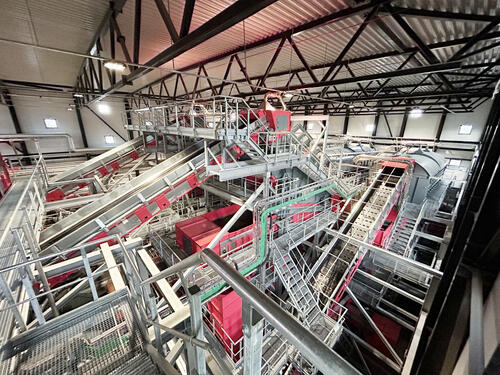
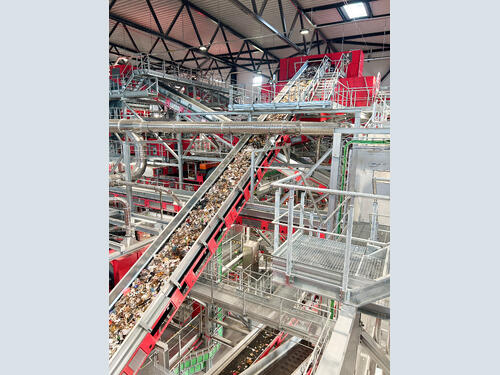
The Resursutvinning Stockholm facility demonstrates this capability in practice. Designed and built by STADLER for Stockholm Vatten och Avfall, its two independent lines process up to 50 tonnes per hour and recover separately bagged organic waste, plastics, ferrous metals and non-ferrous metals. Automated control and flexible plant design enable continuous optimisation as operating conditions change.
For UK authorities and operators, prevention, reuse and source separation must come first, but valuable material will still escape. STADLER brings international experience in designing and delivering turnkey sorting plants together with the local market knowledge of its UK team to help operators recover value from this challenging stream. As Eule concludes: “What we do not recover today becomes tomorrow’s disposal cost, carbon liability and lost resource.”