Road Planing & Particulate Matter
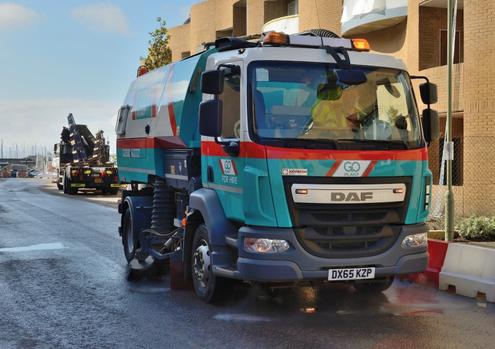
When it comes to road planing and maintenance, improving the standards of health and safety is paramount to clients and contractors alike, not just in terms of the public’s welfare, but also taking into account any potential impact to the surrounding areas and the environment.
Whilst every effort is made to ensure both quality and safety are upheld during the planing, surfacing and maintenance of roads and highways from start to finish, the final element of the process is the sweeping of the newly-surfaced road, and ensures the health and safety of the general public by removing potentially dangerous particulate matter from the environment.
Paul Langham, Managing Director of Go Plant Limited, the UK’s leading provider of operated and self-drive hire sweeper vehicles, explains how the company’s huge investments in developing its fleet is so important in not only ensuring they are of the highest quality and operate at their very best at all times, but in helping the company, and its clients, achieve their own sustainability targets.
“For road surfacing businesses and organisations, sweeping isn’t just on the wish list. It’s an essential part of the entire process, and ensures the safety of site workers, drivers, pedestrians and the wider community. Larger road debris can be hazardous and cause serious damage, but it’s also the finer particulate matter which is key to a highly effective sweep.
Particulate matter is the sum of all solid and liquid particles suspended in air, and can contain dust particles, soot, pollen, smoke and liquid droplets. Particles can range in size too, from course to fine and even ultrafine, and can be transferred into the air not only by roadwork activities itself, but by a variety of natural occurrences such as wind, and sulfur and nitrogen oxide reactions.
In addition to particulate matter, any larger pieces of material left loose on the road after a planing or surface dressing project can change the texture of the road surface and impact traction, which worryingly increases tenfold the accident rate of a section of road.
Designed to remove all traces of debris, including smaller atmospheric matters, modern and well maintained road sweepers are quite literally a life saver. The top of the range, highest performing sweepers do naturally come at a cost. And it’s not always the most effective financial decision for organisations to purchase them outright – taking into account the need for regular maintenance and upgrading and repairs. Which is why outsourcing them to an external provider which specialises in such a service is becoming recognised as the more cost efficient solution.
A sweeper vehicle is very much like a vacuum and works to remove dirt and debris from the environment by sucking it up. Once we sweep up, our vehicles safely store what has been collected until it can be fully processed, and where possible, up to 92% of the collected debris is recyclable. And it is here, where the quality specification of the sweeper is ever-vital.
If, for example, a sweeper doesn’t offer a high level specification, or isn’t up-to-date or properly maintained, it can pick up material seen more clearly by the human eye – such as larger pieces of debris – but spit back out finer, and potentially more dangerous, particulate matter into the environment.
This is one of the very reasons why Go Plant, as an organisation, invests significantly in ensuring its nationwide fleet is maintained to the highest standards possible. Whether that’s us continuously buying brand new vehicles from our trusted manufacturers to replace our older models, providing regular and thorough maintenance and servicing to our existing fleet, or enhancing them with new filtering and suppression systems and equipment.
Our fully trained Construction Skills Certificate Scheme (CSCS) operatives also work closely with clients and contractors alike to ensure the processes are all fully planned, and precautionary procedures undertaken prior, during, and after any resurfacing and planing works on private and public sites.
There are a number of other subsequent benefits as a result of our investment in our sweeping fleet and equipment – from helping us to achieve our own corporate environmental and sustainable targets including fuel efficiency, allowing our customers to access high-performance vehicles at a competitive price, and delivering on works with the technology and capability to reduce the impact on the environment. We’re proud to be true leaders in the field and continually work closely with our selected vehicle manufacturers on research and development to further enhance the capabilities of our fleet for the benefit of the environment,” Paul concluded.
Go Plant’s vehicles, which are manufactured by leading automotive companies including Johnston’s Sweepers, Scarab, Stocks, and Aebi Schmidt, are sought after by clients for a variety of purposes due to their performance, overall cost efficiency, and environmental capability, from airport runways and highways, through to construction sites – particularly when existing residents are present – and busy city centres and schools.