Sort it out: Will robots replace manual waste sorters?
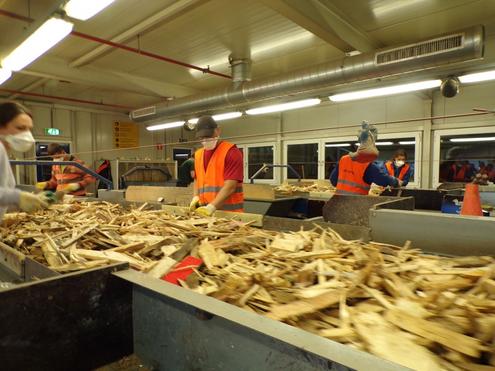
Traditional, manual industries, as we know them are in a period of radical change. Technology is advancing at an alarming rate and changing the scope of what is possible right in front of our eyes.
Many jobs have already been replaced by automation, including bank tellers, book-keepers, shop workers and teaching assistants.
The Bank of England’s Chief Economist, Andy Haldane believes that over 15 million jobs could be at risk over the next two decades.
Although becoming more commonplace in manufacturing environments, robots are not a new concept. The first industrial robot, named Unimate, was introduced into General Motors in 1961 by Joseph F. Engleberger, Founder of Unimation.
More recently, robots have meandered into the waste industry and have started to replace manual workers and have proved to be a key driver in accelerating waste sorting operations across the globe.
Waste separation, a vital process in material recovery has extensive benefits, including landfill diversion, the reuse of profitable waste elements and materials.
The EU have set out targets that aim to have a recycle rate of 70% by the year 2020 and it is estimated that currently 700 million tonnes of waste is currently reused or recycled each year.
With such targets being a major concern to waste companies, finding solutions that are cost effective is a fundamental business strategy. Robots are one way to separate waste more efficiently and faster, with extreme precision and zero downtime.
One of the largest wood recyclers in Holland, Baetsen takes in 130,000 tonnes of waste annually. By using robots in their waste sorting process, they are now achieving recycling rates of up to 75%.
The Euro 1 Million ZenRobotics Recycler which they have introduced into their site is believed to be the first of its kind.
The robot is programmed and ‘taught’ over a set period of time and develops into a highly sophisticated and reliable piece of kit.
In its first two weeks, the Euro 1 Million has the ability to process around 40-50% of its intended targets. After this, when it has adjusted and any potential bugs are corrected, the process rate is 100%.
The Euro 1 million works by using a combination of photographic technology and sensory data. The waste is placed on the conveyor belt where cameras, lasers and sensors determine the type of waste on weight, components and density.
The ‘sensory’ data is then transmitted to the robots ‘brain’ stimulating the robot to work at a rate of milliseconds, quicker than possible by the human hand.
In an hour, the Euro 1 Million can lift, hoist and sort up to 2,000 items, weighing up to 20kg each and the sorting gripper can handle dimensions of 50mm to 500mm.
The system is multi-tasking, with each ‘arm’ being capable of high precision sorting, with a potential purity level of 98%. They also run for 24 hours a day.
It’s no surprise that with technology this advanced, waste companies may look towards these solutions, rather than employing manual workers.
Timo Taalas, CEO of ZenRobotics says, "The ZenRobotics Recycler is a great example of next generation waste sorting. We want to introduce new thinking to the industry.
"The system was designed to lower the cost of recycling and improve the efficiency. Imagine 24/7 waste sorting - that's the benefit of automation."
Author: Kerry Voellner