The rapid rise of e-waste: weeeSwiss (STADLER Group) explores market forces creating breakthrough opportunities and systemic challenges


As e-waste volumes surge and demand for high-purity recycled materials accelerates, weeeSwiss Technology AG, a subsidiary of the STADLER Group and pioneer of WEEE recycling technology, identifies key trends shaping the industry Jochen Apfel, CEO of weeeSwiss Technology AG, shares insights on technology, safety, and the role advanced process engineering plays in the circular economy of tomorrow.Electronic waste is now the fastest-growing waste stream worldwide, reshaping market dynamics across the global recycling sector. With more than 30 years of experience designing, building and operating e-waste plants, weeeSwiss Technology has a unique vantage point on the forces driving this transformation. From evolving regulations and shifting material values to new safety demands and digitalization, the company sees opportunities emerging alongside industry challenges.
For Jochen Apfel, the journey began long before e-waste became a global concern. “My motivation arose at a very young age, while I was completing my training as an energy systems electronics technician. I realized that I couldn’t repair all devices and wanted to develop a recycling solution.” Today, that early drive underpins weeeSwiss’s role within STADLER: delivering advanced process engineering, selecting optimal machinery, designing turnkey plants, and contributing in-depth market knowledge across the entire WEEE value chain.
A market shifting toward high-purity outputs and domestic processing
The surging volume of discarded electronics is accompanied by rising demand for recycled materials, turning e-waste into a competitive market. “We see very positive trends for the e-waste recycling business, as both volumes and raw material prices are continuously rising,” Apfel explains. “The market is demanding recycled materials, and the trend is shifting from mining to urban mining. Even manufacturers are increasingly looking for ways to reuse recycled materials.”
But the picture is not entirely positive. “There are also negative trends, as more short-lived, low-value devices – including products such as chargers, earbuds, small digital accessories, and battery-powered toys that quickly become waste – are entering the market,” he notes. The influx of low-quality products complicates sorting and reduces the economic value of recovered fractions.
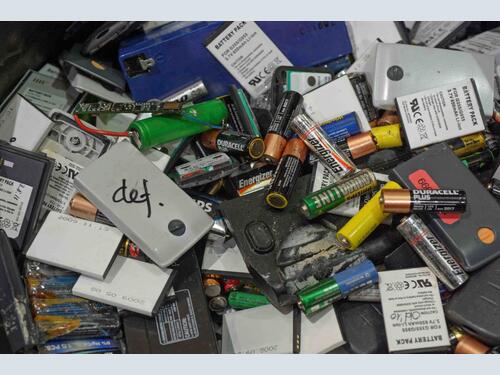
Upstream design plays a critical role in addressing these challenges: “Manufacturers can improve recycling outcomes by simplifying product design and reducing the number of materials used, and by ensuring easy access to lithium batteries to reduce fire risks and allow safe, efficient removal before and during recycling,” notes Apfel. However, even under these difficult recycling conditions, weeeSwiss is able to handle the batteries properly.
Regulations are reshaping the sector as well, especially in Central and Eastern Europe. “Resources are limited and trade between countries is decreasing,” he says. “Regulations are making cross-border movements more complicated and expensive, which in turn leads to a lack of recycling capacity within many countries.” This shift is accelerating investment in domestic processing and the development of a national recycling infrastructure.
Rising precious metal prices, particularly gold, are driving the adoption of advanced recovery techniques. “To meet this need, we’ve just developed a new process capable of separating precious metals from very fine fractions, which in the past were often lost,” says Apfel.
Technological advancements and AI drive the next generation of e-waste facilities
As the market evolves, so does the technology in modern e-waste plants. The shift towards high-quality recyclates is accelerating innovation in sorting, detection and process control. “Technology is evolving precisely in our direction, allowing us to separate high-purity fractions much earlier in the process than was previously possible,” explains Apfel.
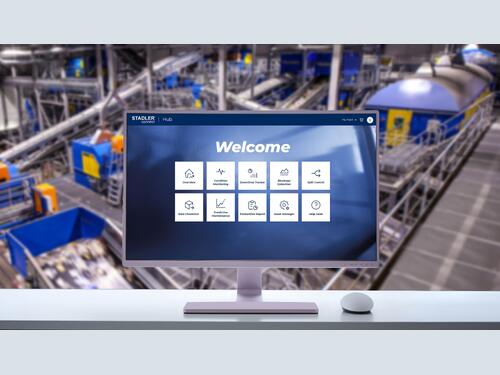
Advanced digital transformation is also reshaping plant operations. “It is now possible not only to create mass balances during process development but also to determine them fully automatically and in real time with the help of AI,” he says. Through STADLER’s digital platform, STADLERconnect, AI supports predictive maintenance, materials analysis, mass balance calculations, and energy consumption optimization.
Safety remains a priority, especially given the fire risks posed by lithium-ion batteries. weeeSwiss and STADLER have developed comprehensive solutions that integrate preventive separation, safe handling, and automated response systems. “In our weeeSwiss Module 1, we separate large batteries, and for the smaller ones, we design the pre-shredder to avoid breaking the batteries, reducing fire risk,” explains Apfel. “If a battery catches fire, a fire detection system triggers an extinguishing system and leads the material directly into a safe bunker. We also use an explosion suppression system in case explosive material is not sorted out. We are developing solutions for automatic battery separation in combination with manual sorting.”
Leading through expertise: proven solutions and a vision for the future
The combined expertise of STADLER and weeeSwiss underpins their leadership in the global e-waste sector. By pairing STADLER’s decades of experience in designing and building turnkey sorting and recycling plants with weeeSwiss’s specialized WEEE expertise, the Group delivers fully integrated solutions to meet the technical and operational demands of modern e-waste recycling.
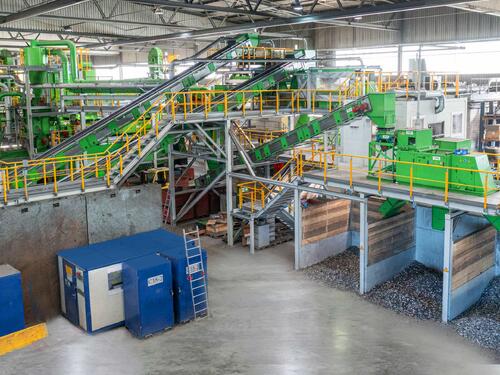
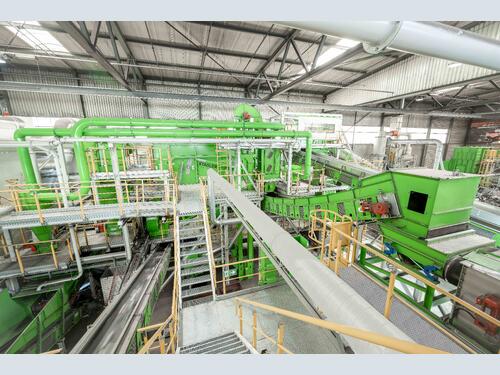
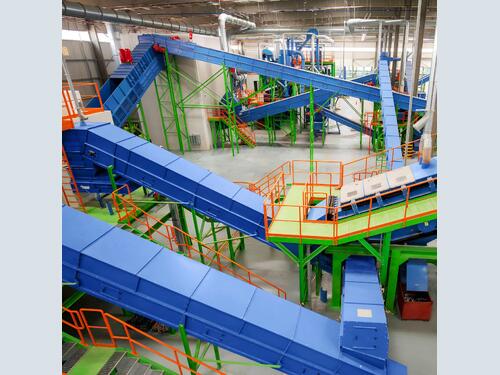
This approach has supported successful projects worldwide, particularly in Europe and the United States, and is driving expansion in South America, Africa, Asia, the Middle East, and Australia. A notable example is the high-performance plant built for Immark AG in Regensdorf, Switzerland – the country’s largest e-waste sorting facility – which sets new benchmarks for throughput, purity and fire safety.
Looking ahead, weeeSwiss has ambitious goals: “Together with STADLER, we aim to not only maintain technology leadership but also to become the market leader in providing e-waste plants,” says Apfel. Advancing this vision, the company is preparing to commission its first automated sorting household battery recycling line – the largest and most modern in Europe – which will significantly increase recycling rates and output quality. “We are developing processes that turn our long-term goal into reality: producing materials from our recycling plants of such high quality that they can be sold directly to manufacturers.”