University of Birmingham chemists develop breakthrough technology to eliminate ‘forever chemicals’ from the environment


Scientists from the University of Birmingham are turning dangerous PFAS into stable and reusable minerals...
The technology was recently named a finalist at the Royal Society of Chemistry’s prestigious 2026 Emerging Technologies Competition
A groundbreaking process converting fluoropolymers and toxic PFAS waste into safe materials, developed by researchers from the University of Birmingham, has been heralded by the Royal Society of Chemistry (RSC) for its contribution to the circular economy.
PFAS (per- and polyfluoroalkyl substances), are a group of man-made chemicals widely used in everyday products like cookware, cosmetics and clothing. Nicknamed ‘forever chemicals,’ because they do not break down naturally, evidence suggests these chemicals may pose risks to human health, wildlife and our natural environment. A common PFAS encountered in everyday life is PTFE.
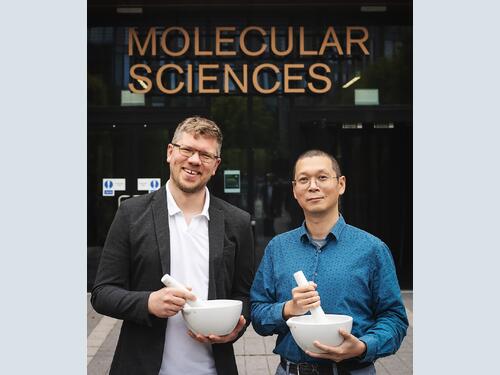
The RSC is celebrating a group of chemists, led by Associate Professors Dr Dominik Kubicki and Dr Erli Lu, after they developed a technology that safely grinds down these harmful forever chemicals with metals and converts them into stable minerals. The minerals can then be used as feedstocks to make critical products like medicines and plastics, preventing the need to mine for such minerals.
The technology was recently listed among the finalists in the RSC’s Emerging Technologies Competition (ETC) 2026, which celebrates cutting edge science that tackles global issues.
Dr Dominik Kubicki Associate Professor at the University of Birmingham said: “Pitching our technology at the ETC was unlike any conference presentation or scientific discussion I have previously experienced. Being named a finalist in the prestigious awards programme has been a significant honour for me and my team.
“Our technology offers an opportunity to avoid harmful forever chemicals entering into the environment and provides the blueprint for the circular chemistry economy. "We were also proud to have worked alongside our colleagues at Newcastle University, in the initial stages of our research, demonstrating the power that collaboration can have across the chemistry industry.”
The cost of cleaning up PFAS pollution across the UK and Europe is estimated to total in excess of £1.6 trillion over a 20-year period, according to the Forever Lobbying Project, with current guidance suggesting the only way to destroy these chemicals is to burn them at extremely high temperatures and by using solvents. These solutions risk further toxic chemicals being released into the atmosphere or the environment whereas the University of Birmingham team's solution is done in room temperature conditions and without solvents, avoiding this risk.
Dr Erli Lu, Associate Professor at the University of Birmingham: “PFAS have become a focal point within the chemistry community and beyond in recent years, with more and more studies revealing their potentially devastating impact on the environment and on human health. Our technology works to neutralise the toxicity of this group of chemicals, breaking down the toughest materials in the world in minutes, without the need for complicated infrastructure.”
Dominik, Erli and their team were inspired to develop this technology after seeing the increasing problem that PFAS waste was creating in environments around the world, aiming to develop a sustainable solution to the challenge.
Having initially developed the technology within the university, the team now aims to scale the solution and bring it to market.
Ben Voysey, Entrepreneurship Manager at the Royal Society of Chemistry, added: “Our annual Emerging Technologies Competition aims to celebrate budding new technologies that address real-world problems and we’ve been blown away by the calibre of entries this year. We believe in the power of chemistry to transform lives and solve real-world problems, and the team at the University of Birmingham are an excellent example of chemistry innovation at its best. We can’t wait to see what’s next for them and the future of their solution for such an important issue.”