Challenging perceptions: is it the right time to consider a career in metals recycling?
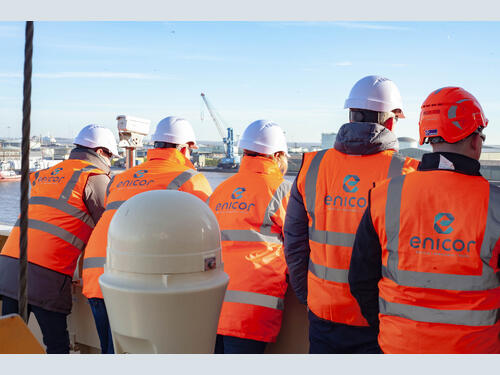



In this article, Siân Hinds, senior commercial manager at Enicor, discusses the recycling industry’s widening skills gap, and explains why sector perceptions must be challenged to show just how rewarding a career in metals recycling can be.
An overlooked career option
When it comes to choosing a career, working in metals recycling is unlikely to be the first option that springs to mind, unless of course you already know someone connected to the trade. However, as the industry continues to expand, it is becoming more important than ever that we attract fresh young talent to drive the sector forward.
With a variety of roles, the sector demands and rewards hard graft and passion. The potential to learn, travel, support global environmental goals, create commercial networks and forge lasting relationships means that, for many, it becomes a fulfilling lifelong career. But we still need to get that message out into communities, colleges and schools.
The skills young people need
For those considering a career in metals recycling, the future is exciting. Recycled metal is becoming increasingly recognised as an asset that will underpin growth in manufacturing and construction. As such, the UK metal recycling sector is growing at a rapid pace and becoming increasingly sophisticated and technologically advanced. The accelerating transition to net zero is driving increasing demand for recycled metals, particularly steel, aluminium, copper, and critical minerals.
At Enicor we have already taken on three young people new to the industry this year. We didn’t expect them to already have experience, just the right attitude, great communication skills, bags of enthusiasm and a sense of entrepreneurship.
While we don’t offer a formal apprenticeship scheme, out ‘traineeships’ are designed to make sure each team member gains experience in all aspects of the business, whether they are working in accounts, the commercial team, or in operations. A deep knowledge of metals, their grades and their values, along with an understanding of the regulatory environment in which we operate, are key in this industry. We believe that the best way to learn is through the job.
An industry-wide challenge
The future for metals recycling looks incredibly bright, but there is concern in the industry that progress could easily be hampered by the UK’s growing skills gap. The sector is faced with an aging workforce, a shortage of engineering capability, increasing technology complexity and a decreasing number of school leavers considering roles within the industry, leading many experts to worry that the industry will experience a deficit of talent, right when it's needed most.
In fact, more than 80% of UK metals companies cite skills shortages as a top concern.[1] There are a number of initiative to help bridge the gap, including the introduction of the Metal Recycling General Operative (MRGO) Level 2 apprenticeship, The British Recycling Association (BMRA) Academy[2] for technical and safety training, and progress on widening access to apprenticeships by leveraging government-funded training grants.[3]
Women in Recycling[4] is a great initiative that has been successful in attracting more women into what has traditionally been seen as a male dominated industry.
Is a job in the industry the right choice?
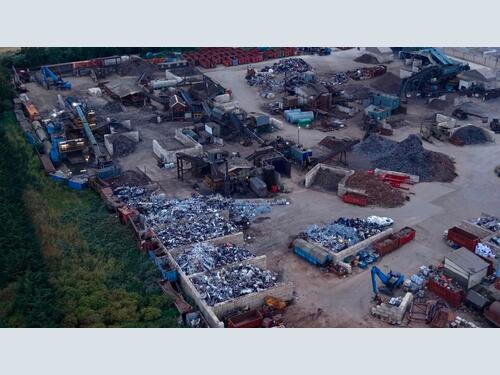
If you want to get into the industry, the best place to start is probably by asking to work in your local metals recycling yard during the academic holidays to get a real feel for what it’s like.
The first thing to know is that health and safety is taken extremely seriously. Whether working on a temporary or permanent basis, a keen health and safety awareness is a must. Beyond that, you’ll gain an understanding of the materials that come into the yard and how they are graded, as well as the commercial awareness needed to validate loads.
Alongside finding out what processing machinery is used on the yard (and how to use it), you’ll also be given an insight into how the industry is regulated – including knowledge of UK environmental laws, end of life vehicle regulations and the Scrap Metal Dealers Act 2013.
When you get deeper into the industry, there are many specialist areas, such as advanced materials and alloy identification, which includes understanding the rare earth metals in electronic waste and vehicle parts in order to ensure they are recovered and their value is maximised. Accurate documentation and record keeping is vital to give end markets confidence that everything that goes back out into the market is fully compliant especially when it comes to depollution and DVLA processes.
We are also seeing increasing use of AI and robotics in our shredding and sorting systems, which requires an understanding of advanced digital equipment, as well as the mechanical and hydraulic equipment that is used for the heavy work.
The commercial aspects of the roles are diverse, which means that understanding markets, pricing and the logistics of getting materials to the right place at the right time are all essential. However, they’re also a key part of what makes this sector so interesting and where the right expertise can help to build a resilient business in an often fast changing and dynamic market.
Do what you love!
As senior commercial manager I love what I do. Every day is different; you meet such a variety of people. I am proud that we are part of the wider recycling industry, helping to protect the planet by recovering valuable metals for reuse and reducing the need extract ores and the associated impact that has on the environment.
Recycling is becoming so much more sophisticated and is much less carbon intensive than getting metal out of the ground. This is why recycled metals are becoming increasingly important as a real asset to businesses that want to specify lower carbon materials – whether that’s in construction, infrastructure or manufacturing. There has never been a better time to work in the industry.
[1] https://www.recyclemetals.org/newsandarticles/state-of-the-metals-industry-in-the-uk-report-2526.html