Maintenance tips for suspended electromagnets


By John Klinge, Eriez® Director-EMEA Operations & Strategy
Proper care and routine maintenance checks go a long way toward saving money and the headaches that come with downtime, especially when it is preventable. Routine checks are critical for all types of equipment, especially in quarry plants, cement plants, mines and recycling operations.
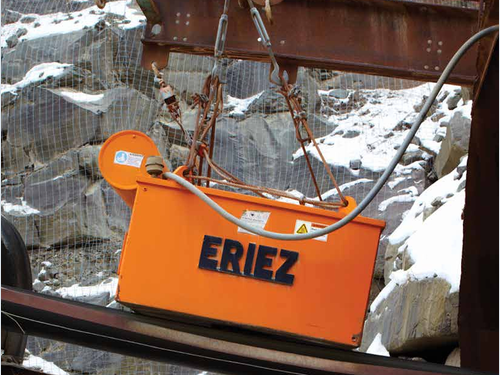
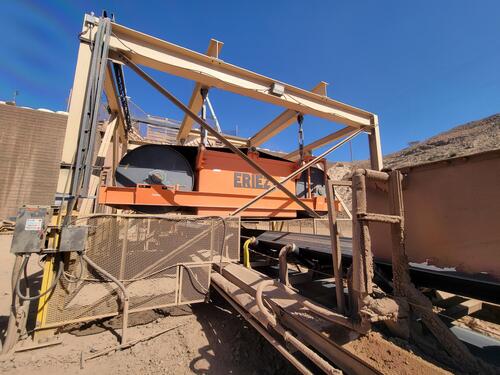
Suspended electromagnets (SE), which are available in both self-cleaning and manual cleaning models, have an average lifespan of 20 years. To reach or even exceed that, it is important for plant operators to schedule preventative maintenance checks to minimize costly downtime.
Here are some tips to keep equipment – specifically SE magnets – in operating condition regardless of the application or environment. Many of these topics can be applied to all SE magnets suspended above conveyor belts.
For manual clean suspended electromagnets, maintenance is straightforward. Plant operators should check suspended electromagnets once a shift or daily for tramp iron that may have built up during operation. When removing tramp iron, the timing is based largely on how much tramp is attracted to the magnet. Don’t let too much tramp iron build up on the magnet before turning it off to clean it. A cleaner magnet is a stronger magnet!
At a minimum, product buildup and dirt should be cleared from the top of a suspended electromagnet once a month. Limestone dust, for example, can collect on top of the magnet box and act like an insulated blanket, which can weaken the magnet’s strength by heating it beyond its operating temperature. A cooler magnet is a stronger magnet!
Maintenance tips for self-cleaning suspended electromagnets are included below.
Check Rubber Belt Daily
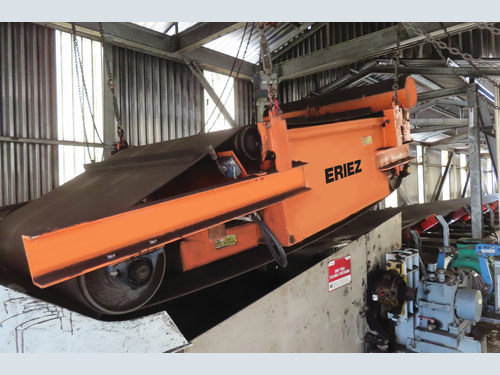
Conveyor belts around the suspended electromagnet are available in a variety of widths based on the size of the magnet, but the same maintenance protocol applies since the equipment has its core functionality: the heavy-duty rubber belt and pulley are set up to discharge tramp iron from the magnet.
Put safety first when checking the belt on a self-cleaning suspended electromagnet. Stop the belt before troubleshooting or performing checks and maintenance. Routine inspections are required to increase the life of a suspended electromagnet belt. Plant operators can inspect a belt in the morning, only to discover a hole in it that afternoon.
On average, a rubber belt can last anywhere from 6-12 months, but it really depends on the sizes and shapes of the tramp iron traveling on a conveyor that are attracted up to the magnet. One large piece of tramp iron can destroy the belt on a self-cleaning suspended electromagnet, but the cost of a replacement belt pales in comparison to the damage and downtime that could be caused by this tramp metal destroying a long conveyor belt, crusher, or other equipment downstream of the magnet.
It is important to keep the belt around a suspended electromagnet running when it is energized. When running, it acts like a fan and helps to cool the magnet. Remember, a cooler electromagnet is a stronger magnet!
Since you cannot predict tramp iron and belt damage, it is very important to keep a spare belt on hand, as well as a belt repair kit. The kit includes rubber patches and epoxy compounds to repair small holes in the belt.
Check Belt Tension Monthly
Efficient belt operation can be achieved without applying excessive tension on the pulleys.
If the tension is too tight, it can cause premature failure of the rubber belt, pulley shafts or bearings. If the tension is too loose, excessive sag could result in interference from the belt onto the conveyor the aggregate is traveling on.
The belt should only be tightened enough to prevent slipping when conveying tramp iron off the magnet. For best performance, have 1-2 inches (25-51 mm) of sag at the ends of the magnet corner. Three inches, or 76 mm, at the center is acceptable unless it interferes with material flow.
Grease Bearings Monthly
Lubricate bearings on a schedule consistent with other equipment in the same environment. A NGL1 No. 2 lithium-based grease is recommended.
A simple pump from a grease gun every month makes a noticeable difference. Limestone and cement dust will destroy bearings in short order if not lubricated on schedule. A destroyed bearing will lead to a costlier repair if the pulley shaft gets damaged. After 250 hours of running, check pulley hubs and tighten the screws to 17 lb.-ft. (23 Nm) of torque.
Check Oil Yearly
Lastly, make sure to check the oil level on all suspended electromagnets once a year. If low, fill it to the proper level and find the source of the leak. The transformer oil should be changed every five years. In between, filter press the oil. A suspended electromagnet is strongest with fresh oil having a higher KV value.
Contact a Technician or Service Center for More Help
Routine checks and scheduled maintenance (procedures many plant operators already have incorporated into their production schedule) can go a long way in extending the life of a suspended electromagnet and avoiding costly downtime.
Remember, while the lifetime of a suspended electromagnet is fairly predictable, the life of a rubber belt can vary, so it is highly recommended to have a spare belt and belt kit on hand and at the ready.
Plant operators should also consider contacting a technician or service centre, to help keep production moving. The Eriez Service Centre offers a 24/7 service hotline, on-site field service, plenty of stocked spare parts, and factory repairs that come with full “as new” warranties.
For more information or an immediate estimate, call +44 29 2086 8501 or visit eriez.com
Associated Businesses