Market Gap Closed: Doppstadt and RTT present the IMS 2 Semi-Mobile Sensor Sorter at IFAT
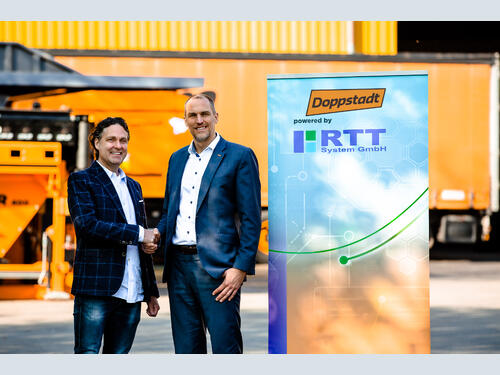
- Strategic Partnership: Joint development with RTT System GmbH completed in record time
- Modular semi-mobile sensor sorter capable of using or combining different sensors
As part of its “Doppstadt 2030” future strategy, Doppstadt is closing a critical gap in the processing of various material streams, such as mixed construction waste as well as commercial and bulky waste. In cooperation with RTT System GmbH, the company developed the semi-mobile, modular sensor sorter IMS 2. For the first time, this solution combines modern high-end sorting technology with the flexibility of mobile systems. Doppstadt will present its groundbreaking machine for the first time at the IFAT trade fair in Munich from May 4 to 7.
Behind this innovation lies a strategic partnership in which both companies have combined their specific core competencies. “The collaboration took place in record time and on a completely equal footing,” explains Dr. Phillip Nellessen, Managing Director of Doppstadt. This collaborative approach made it possible to efficiently combine technological expertise and market experience. Hendrik Beel, Managing Director of RTT System GmbH, emphasizes: “Our expertise in automation and artificial intelligence, combined with Doppstadt’s deep understanding of machinery and the requirements of the recycling and waste management industry, complements each other perfectly.”
Four modular sensors, one mission: Maximum purity
The result of this collaboration is the semi-mobile sensor sorter IMS 2. At the heart of the system is a state-of-the-art sensor unit. The solution combines four detection methods for the precise identification and removal of materials. Data from a NIR sensor, a 3D shape recognition tool, and a color camera are seamlessly merged and analyzed in an AI-based module. An induction loop for reliable metal detection completes the system.
Plug & Play instead of Laborious Density Separation
A key advantage over conventional methods, such as density separation using water, is the elimination of wastewater disposal and the need for labor-intensive post-processing of the fractions. The IMS 2 is designed as a “Plug & Play” solution: It can be easily integrated into the existing Doppstadt Mobile Modular Processing Concept (MMPC), for example in combination with the INVENTHOR series and the new SWS 6. Sorting parameters are configured individually by RTT according to customer requirements and can be adjusted remotely if necessary.
Efficient Integration: The IMS 2 in the MMPC
The new sensor sorter was specifically developed for use within the MMPC. It integrates seamlessly into the system as a high-performance component. While expensive stationary solutions remain the standard in the recycling and waste management industry, Doppstadt offers a highly economical and legally compliant alternative with the MMPC. “The use of standard components ensures a high residual value for the machines,” explains Michael Zeppenfeldt, Sales Manager for Germany at Doppstadt. The concept offers economic advantages, says Zeppenfeldt: “With low investment costs and a simultaneous increase in added value, the MMPC quickly achieves profitability. This results in one thing above all: maximum cost-effectiveness in the processing of various material streams.”
Visitors to IFAT can see the IMS 2 and the entire Doppstadt portfolio up close from May 4 to 7, 2026, at FM.709/1 of the Munich Trade Fair Center.