WASTED OPPORTUNITY: UK sustainable tech pioneer slams plunging global recycling rates
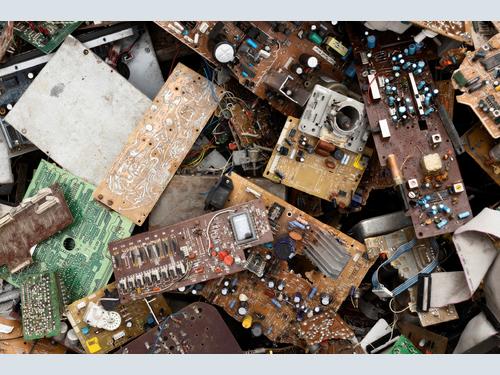
Falling global recycling rates will have dire consequences for innovation and business growth, warns UK renewable electronics technology leader In2tec.
Only 6.9% of the 106bn tonnes of materials used annually by the global economy came from recycled sources, a 2.2% drop since 2015, according to research from the Circle Economy think tank.
The Circularity Gap Report 2025 found that global material consumption is outpacing population growth and generating more waste than recycling systems can handle, underscoring the need for circular economies and positioning sustainability at the forefront of product design.
Emma Armstrong, Sustainable Electronics Ambassador and Group Commercial Director at In2tec, said: “Another day and another report outlining the depressing lack of progress on global recycling.
“What’s particularly frustrating is that recycling rates are dropping despite the environmental, health, and economic costs of our short-sighted throwaway economy.
“Repairing, reusing, and recycling otherwise obsolete technology conserves the vital rare earth elements, aluminium, copper, and steel needed for the progress of humanity, ultimately saving consumers and businesses money.”
The report recognises that recycling alone is not enough. Even if all recyclable goods were recycled the rates would only reach 25%, meaning consumption must be slashed to tackle a growing global waste crisis.
Ivonne Bojoh, chief executive of Circle Economy, said: “Our analysis is clear: even in the ideal world, we cannot solve the triple planetary crisis by mere recycling… it requires fundamental change.”
Emma is an advocate for unzippable technology, where electronics are designed to be disassembled so components can be easily repaired, replaced, and recycled.
“Many devices and appliances are intentionally designed with a limited lifespan—a concept known as built-in obsolescence—encouraging consumers to replace rather than repair them,” she said.
“The Circularity Gap Report does an excellent job of highlighting the vast wellspring of untapped potential presented by reduced material consumption and increased global circularity.
“It allows companies to extend the life of the tech and limits the need to buy increasingly rare – and expensive – replacement products and components. The tech also leads to new revenue streams from the sale of recovered materials at the end of the product’s useful life.”
In2tec aims to slash the harrowing environmental and societal impact of ewaste and provide innovative solutions to the growing problem of throwaway electronics.
Historically, technical challenges have made circularity in the electronics industry economically unviable. Stress caused to de-soldered components by the reclamation process can limit the opportunity to regain viable components, and widely used methods of recovering materials are inefficient, destroy value, and are costly in terms of emissions/energy.
The company’s signature ReUSE® and ReCYCLE™ are alternatives that comprise a closed-loop process allowing manufacturers to remove components from existing electronics at the end of their useful life and reuse them.
ReUSE® is a suite of materials, processes, and design principles used to manufacture printed circuit board assemblies (PCBAs) to the same environmental and functional specification as traditional methods, while ReCYCLE™ is the ultra-low energy process for unzipping PCBAs – the foundation of nearly all technology – to the original bill of materials (BoM).
The technology's versatility allows global commercialisation and a vast reduction in the overall energy used to manufacture and process when it reaches its end of life, something that is impossible when using conventional PCBA processes or materials.