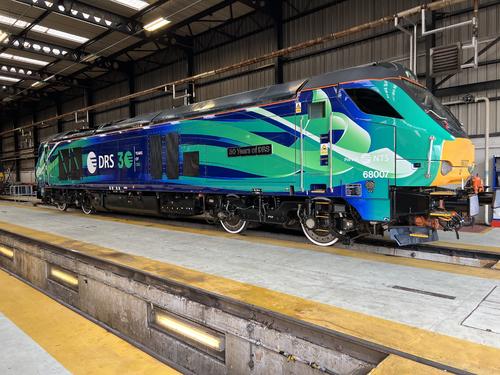
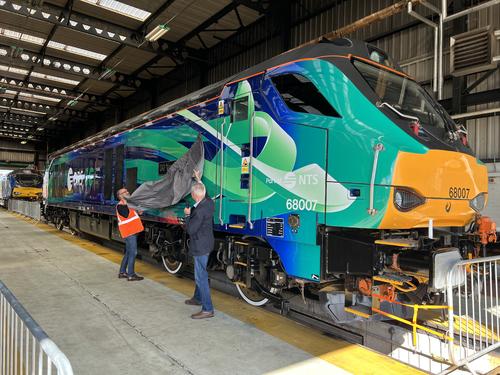
30 years of Direct Rail Services


1995: Formation and early development
- Founded on 13th February by British Nuclear Fuels Limited (BNFL) to transport nuclear material safely and efficiently.
- Initially based at Sellafield, Cumbria, with a team of three directors and four railway professionals.
- Acquired 16 Class 20 locomotives from the Channel Tunnel project and had five refurbished and reactivated.
1996: First operations and milestones
- Gained its operator’s licence and ran its first train on 24th January - a rake of empty wagons.
- Used five DRS 20/3s for driver training and hauling acid trains to Folly Lane near Runcorn.
- On 31st May, 20301/302 were used on the Royal Train when HM Queen Elizabeth II visited Aberystwyth.
- The following day, along with 20303, they debuted on a charter train (operated by EWS).
- Ran the first loaded nuclear flask train from Sellafield to Barrow Docks on 19th September.
- Began running short trainloads of nitric acid from Sandbach to Sellafield in December.
1997: Expanding nuclear and domestic freight
- Began transporting spent nuclear fuel from overseas to Sellafield for reprocessing.
- Entered the domestic freight market with a four-week trial of intermodal milk trains from Penrith to Cricklewood.
- Purchased six Class 37/6 locomotives from Eurostar.
- Signed its first transport contract with EDF Energy.
- Acquired 12 ex-BR Telecommunications Class 20s in July and another from Pete Waterman in September.
- The need for nuclear trains to convey a brake van was rescinded.
1998: Relocation and fleet growth
- Selected six more Class 20s for refurbishment in March; four more overhauls authorised in September.
- Relocated from Sellafield to a disused track maintenance depot at Kingmoor, Carlisle.
- Started transporting spent nuclear fuel from UK power stations to Sellafield for reprocessing.
- Acquired seven Hunslet Barclay Class 20/9s; six operational and one as a spares donor.
1999: Key milestones
- Officially opened the refurbished HQ at Kingmoor, Carlisle.
- Contributed to the Kosovo “Train for Life” initiative.
2000: Fleet expansion and upgrades
- Purchased more Class 20s (for spares) and eight Class 33s from EWS; overhauled four of the 33s.
2001: Entry into general freight market
- Bought 17 Class 37/0s from EWS; overhauled a handful with new look cabs.
- Entered the general freight market with a Daventry-Grangemouth service for WH Malcolm.
2002: Fleet expansion and new contracts
- Ordered ten Class 66 diesel-electric locomotives for intermodal freight operations.
- Signed a contract with Magnox and launched services for ASDA in partnership with WH Malcolm.
- Discontinued barrier wagons on nuclear trains and increased maximum line speed from 45mph to 60mph.
- Acquired three more Class 37/6s from Eurostar UK and ten Class 47s.
2003: Community engagement and fleet modernisation
- Hosted the first Open Day at Kingmoor Depot to celebrate and engage with rail enthusiasts.
- The first five Class 66s entered traffic in October, sporting a new ‘Compass’ livery.
- Ran two trains a day between Daventry and Scotland for WH Malcolm.
2004: Expansion and new routes
- Trialled two Class 87 electric locos on WCML intermodal traffic but did not pursue their use.
- Acquired three more Class 37s from Harry Needle.
- Introduced two internal Scottish routes and a daily intermodal link between Purfleet and Widnes.
- A Grangemouth-Aberdeen train for WH Malcolm began operation in April, carrying mainly ASDA supermarket traffic and scheduled to run seven days a week.
- In November, DRS introduced a daily train between Grangemouth and Elderslie, again in conjunction with WH Malcolm, who later received a £1.65m Freight Facilities Grant for new container handling equipment and a new storage area at Elderslie. This route, less than 40 miles long, offered a reliable alternative to the often-congested motorway through Glasgow.
2005: Ownership transfer and fleet adjustments
- Ownership transferred from BNFL to the Nuclear Decommissioning Authority (NDA).
- Swapped four Class 33s for three Class 37s with West Coast Railways.
2006: New partnerships and depot openings
- Acquired two Class 08 shunters.
- Received the second batch of Class 66s.
- Opened a new depot in Inverness and conducted its first Ministry of Defence movement.
- Introduced a daily rail service for Tesco in partnership with Eddie Stobart.
2007: Depot growth and passenger services
- Opened depots at Crewe and York, enhancing operational capabilities.
- The first Class 57s joined the fleet in May.
- Gained a passenger operating licence allowing it to run charter trains.
2008: Fleet adjustments and strategic partnerships
- More Class 57s, Class 37s, and Class 47s were added to the fleet, including a second Class 37/4.
- In November, 66401-410 were returned to their ROSCO, and 66431-434 were taken on to reduce the Class 66 fleet from 30 to 24.
- 66434 was painted in the livery of Fastline Freight, which hired the locomotive.
- On March 12th, DRS operated the Network Rail inspection saloon for the first time, a regular turn for a DRS 37 for the next 13 years.
- Partnered with Network Rail, Aggregate Industries, and the Port of Workington to transport over 140,000 tonnes of aggregates for a new low-level waste facility at Drigg.
2009: Emergency response and service expansion
- Supported flood recovery efforts in Cumbria, transporting 4,000 passengers and assisting with track repairs.
- Launched a daily service for Tesco from Grangemouth to Inverness with the Stobart-liveried Class 66 ‘James the Engine,’ helping reduce congestion on Scottish roads.
- Began the ‘Thunderbird’ service for Virgin Trains in June, providing emergency breakdown recovery for Virgin’s high-speed Pendolino trains.
- Gained a new Stobart/Tesco intermodal flow between Daventry and Ripple Lane in autumn, sharing haulage with Tate & Lyle tanktainers.
2010: New routes and service innovations
- Ran a two-week trial between Tees Dock and Widnes carrying 9ft 6in boxes for P&O Ferrymasters, using alternative routes due to loading gauge restrictions.
- Introduced a daily train on the Tees-Widnes axis in October, carrying mainly Procter & Gamble products.
- Successfully established the fleet of Lowliner wagons on other routes, including the Anglo-Scottish axis.
- Took on scrap metal movements from Stockton and Tyne Dock to Cardiff following the collapse of Advenza.
2011: Cruise saver passenger services
- Started running a series of Cruise Saver trains from Scotland to Southampton, taking passengers to cruise ships.
2012: Low-level waste management and service growth
- Signed an integrated service contract with LLWR at Drigg, managing rail and road elements for the movement of low-level waste around the UK.
- Managed the construction of Georgemas Terminal for shipments from Dounreay to Sellafield.
- The ‘Tesco Express’ returned to DRS, worked by Class 92s hired from DBS.
- Launched the Daventry to Wentloog train carrying Tesco ‘Less CO2’ boxes for the Welsh market in February, running six days a week.
- Started providing locomotives (usually 37/4s) and Mk 2 coaches for Sellafield workers from Carlisle on an initial six-week trial.
- Completed the construction of Georgemas Terminal in the summer, with the first fuel shipment from Dounreay to Sellafield following shortly after in late 2012.
- Took another six Class 57/3s on lease from Porterbrook in March.
2013: Dual-mode innovation and infrastructure projects
- Began developing Class 88 dual-mode locomotives in collaboration with Vossloh.
- Extended the Daventry-Mossend service to six days a week.
- Gained a share of railway infrastructure traffic for Network Rail, starting with the Carlisle-Crewe infrastructure train via the Settle to Carlisle line.
- Took over local ballast trips between Carlisle and Shap later in the year.
- Signed a contract with Research Sites Restoration Limited (RSRL) for transporting material from Berkeley railhead to Sellafield.
2014: Mixed loads and Class 68 debut
- Launched the first mixed loads service for nuclear transport in collaboration with Magnox and RSRL, supporting the NDA’s Capability Retention Strategy.
- 68002 arrived in the UK in January and was shown off to the press in March.
- On September 23rd, 68006 worked the 0623 Glasgow Central-Gleneagles additional train for a golf tournament, with 68005 on the rear for the return journey; the first Class 68 passenger workings.
- December 6th saw the first use of a Class 68 on a charter train.
- In December, Class 68s hired from DRS started on Chiltern Railways’ Marylebone to Banbury route, with six locos (68010-015) delivered from Spain in the company’s livery and 68008/009 given modifications to work on push-pull Mk 3 trains.
2015: Industry recognition
- Introduced Class 68 locomotives for nuclear trains.
- Completed the first live ‘Exotics’ movement.
- Successfully used the first laden FNA-D on a Heysham nuclear service, replacing aging FNAs with 10 newly procured FNA-Ds.
- Won the Rail Freight Group Award and Environmental Innovation Award.
- Received the Environmental Innovation Award for contributions to rail freight services.
- The Vossloh Euro Dual Class 68 dual-mode freight locomotive came on-stream, with seven more units ordered, bringing the total fleet to 32.
- Signed a deal with Northern to provide two locomotive-hauled trains and crews for the Cumbrian Coast from Carlisle to Barrow/Preston after a three-year hiatus.
- Started providing Class 37s and Mk 2 coaches for regular duty for Greater Anglia between Norwich and Great Yarmouth/Lowestoft.
- By 2015, nuclear trains had covered over 12 million miles since 1962 without a single incident involving the release of radioactive material.
2016: Class 88 introduction and new headquarters
- Debuted new Class 88 locomotives, combining 25kV electric and diesel-electric operating modes. The first Class 88002 arrived from Stadler Rail, Valencia, as part of a fleet of 10 locomotives ordered in partnership with Beacon Rail Leasing Limited.
- Opened a new head office at Kingmoor Business Park in Carlisle, allowing Kingmoor depot to return to its operational, engineering, and training functions.
- Greater Anglia hired an extra trainset from DRS, using top-and-tail Class 68s, Mk 2 coaches, and DRS crews for a year.
2017: Award-winning projects and fleet expansion
- Won the Rail Freight Group’s (RFG) Rail Freight Project of the Year for the Class 88 locomotive, praised for its ability to haul heavy intermodal freight trains on electrified routes while using its diesel engine in non-electrified areas, significantly improving energy efficiency and rail freight’s competitive edge.
- Ordered and delivered two further Class 68s, 68033/034, owned outright by DRS and not leased.
2018: Weather challenges and business excellence
- Assisted Network Rail in clearing snow during the “Beast from the East,” patrolling and ploughing snow to keep key routes open across the UK.
- Named RFG Business of the Year, recognized for excellence in customer services, innovative solutions, and progressive staff development.
2019: Farewell to Class 37 and new services
- Commemorated the end of Class 37 operations on the Cumbria Coast.
- Launched a new weekend service from Tilbury to Grangemouth in partnership with Eddie Stobart and Forth Ports, linking the South of England to Central Scotland.
- Class 68s started work for Transpennine Express, with 14 locomotives dedicated to this work.
2020: Cars, COVID-19, and Christmas
- Retired the last of the company’s Class 20s in January, following a final season of RHTT work from York and a farewell charter.
- Secured a new contract to operate Ford’s automotive rail services between Dagenham and Garston.
- Enacted business continuity plans and implemented extra safety measures for staff during the COVID-19 pandemic.
- For the first time, DRS’s Class 88 ran almost the entire length of the East Coast Main Line (ECML) using electric power.
- Played a vital role in delivering millions of festive goods across the UK, handling 30% of Tesco’s Christmas range.
2021: Organisational changes and sustainability initiatives
- Joined with fellow NDA subsidiaries, International Nuclear Services (INS) and Pacific Nuclear Transport Limited (PNTL), under a new entity, Nuclear Transport Solutions (NTS), launched in April 2021.
- Began selling off heritage locomotives, including the iconic Class 20 and 37 engines.
- Introduced a new locomotive design at COP26, using Hydrotreated Vegetable Oil (HVO) fuel to cut carbon emissions by up to 90%.
- Partnered with Tesco to launch a new refrigerated rail service, taking 40 lorries off the road per journey and supporting Tesco’s sustainability goals.
2022: Continued growth and industry awards
- Signed a new three-year deal with Tesco.
- Won the Freight and Logistics Achievement of the Year Award.
- Successfully transported over 1,000 stainless steel drums of waste from the Winfrith Magnox site to the Low-Level Waste Repository.
2023: Royal visit and operational enhancements
- The fuel point at DRS Motherwell depot went live for the refuelling of locomotives in the North.
- Her Royal Highness the Princess Royal visited NTS’s port in Barrow-in-Furness and toured a Class 68 locomotive.
2024: Fleet modernisation and community engagement
- Retired the iconic Class 37 locomotives as part of its fleet modernisation efforts.
- Took delivery of 25 new JNA-Z box wagons from WH Davis to increase capability for NDA group work.
- Completed a major collaboration between NWS and NRS to transport more than 1,000 drums of waste earlier than expected.
- Hosted an open day at Kingmoor depot, drawing over 1,500 attendees and raising £65,000 for charity.
- Launched the 9th rail freight service for Tesco.
- Secured a new three-and-a-half-year agreement with Tesco.
2025: New partnerships and innovative services
- Secured a new five-year deal with logistics experts John G Russell Limited (JGR).
- Started a groundbreaking rail service trial from Teesport to Manchester, using ultra-low IDA wagons for standard high-cube containers.
- Launched a new rail service to deliver over 46,000 tonnes of aggregate for the Southern Trench Interim Membrane (STIM) project aimed at the safe and secure disposal of nuclear waste.