Compaction in Action: Resolving Bulk Silo Blockages


Mike Moody / Business Development Manager - Air Cannons / Martin Engineering...
Clogging issues associated with silo and hopper management have inspired safety-minded companies to seek efficient and economical solutions. After facing excessive clogging in its hoppers, Tilcon Connecticut Inc., a producer of building materials like crushed stone, hot mix asphalt, and ready-mix concrete in the Northeastern region of the United States, is one of those companies.
Operating several silos and hoppers for storage and controlled product flow in its North Branford Quarry, Tilcon works with a wide array of material consistencies that have unique flow properties. However, operators were having buildup and clogging challenges with the silos and hoppers handling basalt.
“Usually, clogging and flow issues were resolved by personnel certified in confined space entry using tools and equipment we installed to safely support the task,” said Alex Gere, Superintendent for Tilcon. “However, greater production demands by customers have increased the clogging occurrences.”
Bulk Powder and Production
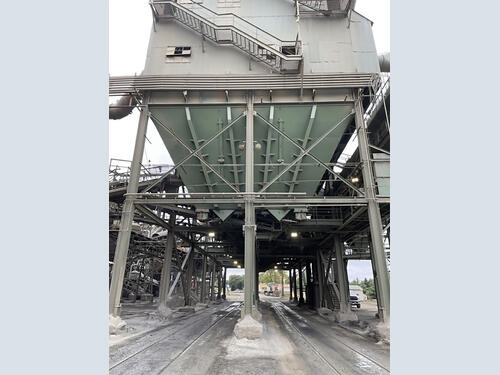
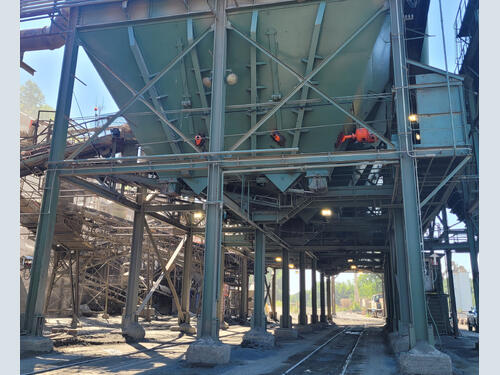
Headquartered in New Britain, Connecticut, Tilcon operates four quarries and three sand/gravel pits in the state. Tilcon’s two basalt silos were placed side by side, each 40 feet long, 15 feet wide, and 20 feet deep, with a total of 500 tons of capacity. Fed by conveyors, the bins discharge into haul trucks and rail cars.
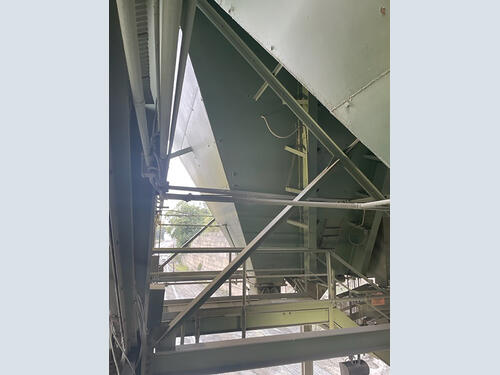
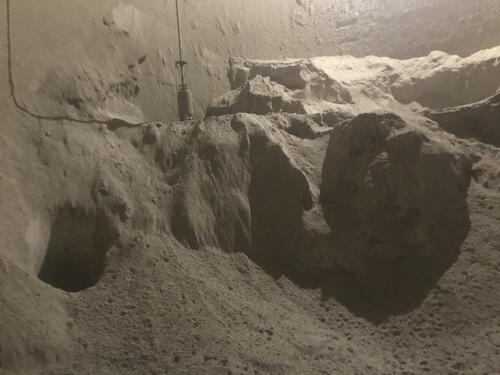
Generally, clogs occur at the bottom of the vessel, where the pyramidal slope consolidates material and discharges at a narrow spout. A dedicated two-person crew maintained the bins on a two-shift cycle for cleanup and flow management. Under optimum operating conditions, the crew cleared the bins weekly for about four hours. In moist or humid conditions, operators experience several clogs throughout the shift, which cut production time by up to five hours per day. These conditions vary season by season.
Many Solutions, Varying Results
Tilcon managers tried several methods to mitigate buildup in the hopper and alleviate clogging. The first method involved the maintenance crew monitoring and resolving the clog through a manual de-clogging procedure.
To clear the clog, both assigned staff members who were trained and certified in confined space entry were fitted with a harness attached to an emergency retrieval system. One would enter the vessel and clear the clog and buildup using a spade shovel supported by the other employee to ensure immediate response to any issues, then they would switch places at certain intervals. Previously, this was adequate to get the material flowing for the rest of the shift, but with greater production and changes in the climate, the prevalence of clogging increased, which seriously impacted production.
Seeking solutions that would eliminate confined space entry, operators first put large industrial vibrators on the hopper. These would agitate surfaces and shake free buildup. Unfortunately, they were inadequate for the job. Maintenance found they could not deliver enough power to clear the clog adequately and sometimes helped compact the material further.
Operators then attempted to line the chute with a low-friction liner. Chute supports inside the bin proved to be incredibly challenging for proper placement and maintenance. The lining would require periodic adjustment or cleaning, exposing the team to the same confined space entry risks as normal cleaning.
Staying with the slick liner concept, operators installed an inflatable liner system. When buildup is detected, the liners inflate using compressed air, dislodging it and sending it to the center of the bin. Although the technology reduced the frequency of cleaning, operators report that it was not highly effective and still posed hazards and risks similar to those of the liner system.
Silo Clogging Solutions
Having a long relationship with Tilcon through providing conveyor belt cleaners and tensioning systems, plant operators approached Martin Engineering to discuss implementing an air cannon solution.
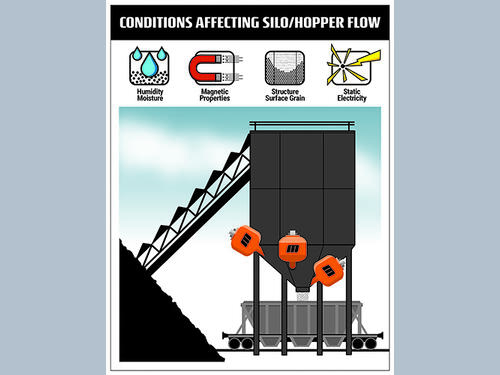
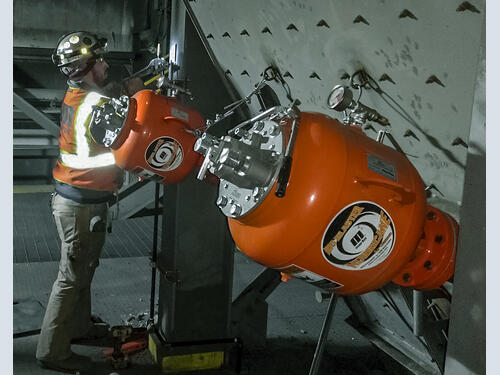
Air cannons are pressurized tanks connected to a central compressed air system. When triggered, they deliver a powerful blast of air toward an area specified by the direction and design of the nozzle. This blast is intense enough to dislodge thick surface buildup and break apart compacted material.
Installing and Testing Air Cannons on Hoppers and Silos
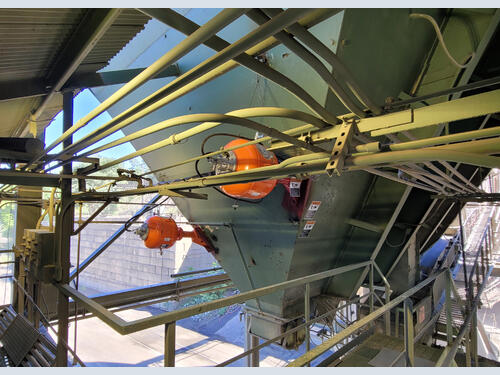
For the testing phase, Martin Territory Manager Nabeel Suleiman partnered with an internal support team to strategically recommend and identify the placement of two 70-liter Martin® Hurricane Air Cannons with fan jet nozzles on the hopper and to be completed during a scheduled outage or downtime.
“After installation, the cannon's effectiveness was immediately evident as a substantial amount of material was rapidly discharged from the bins into our haul truck with just a few quick blasts,” said Gere. “Observing the performance, we knew we’d finally found our solution.”
Results
After several months, operators found the solution freed up two maintenance people for an entire shift. This allowed them to allocate 16 additional hours per week to other facility maintenance/safety tasks, translating to 64 monthly man-hours dedicated to greater efficiency.
According to managers, without buildup, the bins have greater capacity. Most importantly, staff no longer need to enter the vessel to clear clogs. “This one-time investment eliminated our costs significantly on materials and labor for cleaning the bins while ensuring our personnel's safety,” Gere explained.