Improving Quarry Safety Through Effective Site Demarcation


Why Visual Demarcation Has Become an Essential Part of Modern Quarry Operations…
Health and safety have always been at the heart of quarry operations. Every day, sites across the UK manage the movement of large articulated dump trucks, loading shovels, excavators, telehandlers, HGVs and processing plant, often within the same working environment as contractors, maintenance teams and visitors.
While the quarrying industry has made significant improvements in safety over recent decades, workplace transport remains one of the principal risks identified by the Health and Safety Executive (HSE). Managing vehicle movements, separating pedestrians from plant and clearly identifying hazardous areas continue to be fundamental elements of an effective health and safety strategy.
The Quarries Regulations 1999 require quarry operators to ensure that risks are adequately controlled through suitable management systems, safe traffic routes and effective site organisation. Likewise, the Health and Safety at Work Act 1974 places a duty on employers to protect employees and others who may be affected by their activities.
Although these responsibilities are often addressed through comprehensive traffic management plans and operational procedures, the importance of clear visual site demarcation should not be overlooked.
According to Owen Batham, Sales and Marketing Director at Elite Precast Concrete, effective visual guidance plays an increasingly important role in helping operators maintain safer working environments.
"Modern quarries are constantly evolving. Stockpile locations change, contractors arrive on site, maintenance activities take place and vehicle routes are regularly altered. Operators need practical solutions that can adapt quickly while continuing to provide clear visual guidance for everyone working on site."
Workplace Transport Remains a Major Safety Focus
The HSE continues to identify workplace transport as one of the most significant causes of fatal and serious injuries across heavy industry. Within quarries, the risks are heightened by:
- Large mobile plant
- Blind spots around machinery
- Dust reducing visibility
- Uneven ground conditions
- Temporary works
- Contractors unfamiliar with site layouts
- Multiple vehicle types operating simultaneously
Managing these risks requires more than written procedures. Safe systems of work rely upon clear communication, visible boundaries and physical measures that help everyone understand where they should and should not be.
This is where highly visible site demarcation products can make an important contribution.
Creating Clear Vehicle and Pedestrian Routes
One of the fundamental principles of quarry traffic management is the segregation of vehicles and pedestrians wherever reasonably practicable.
Loading shovels, excavators and articulated dump trucks often have restricted visibility, making clearly defined pedestrian routes essential.
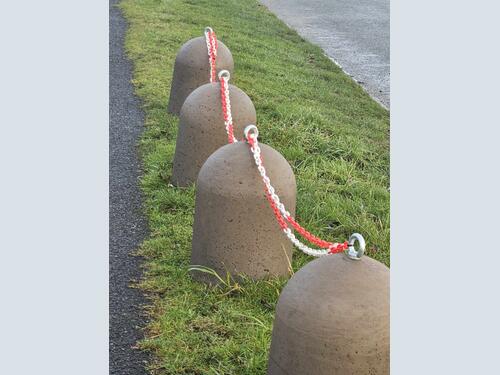
Highly visible bollards can be used to create:
- Pedestrian walkways
- Safe crossing points
- One-way traffic systems
- Designated vehicle routes
- Loading and unloading areas
- Contractor access routes
- Visitor pathways
These clearly defined routes help reduce uncertainty and reinforce site rules, particularly for contractors and visitors who may be unfamiliar with the quarry layout.
Unlike permanent infrastructure, movable bollards also allow operators to modify traffic management arrangements as operations evolve.
Defining Exclusion Zones Around High-Risk Areas
Every quarry contains areas where access should be carefully controlled. These include:
- Primary crushers
- Secondary processing equipment
- Screening plants
- Conveyor systems
- Stockpile edges
- Tipping areas
- Maintenance activities
- Excavation faces
- Temporary construction works
Clearly marking these locations helps reinforce exclusion zones and reduces the likelihood of unauthorised access.
Visual demarcation should not replace physical guarding or established safety controls but complements them by improving awareness across the site. When combined with warning signage and site induction procedures, clearly defined exclusion zones become easier for employees, contractors and visitors to recognise.
Helping Contractors Navigate Complex Sites
Contractors often present one of the greatest challenges for quarry managers. Maintenance engineers, civil contractors, surveyors and specialist installers may only visit a site occasionally and therefore have limited familiarity with operational layouts.
Temporary works can further complicate navigation by introducing new hazards, altered vehicle routes or restricted access areas.
Using highly visible site markers provides contractors with immediate visual guidance, helping them remain within designated safe areas while supporting site induction procedures. This becomes particularly valuable during planned shutdowns or major capital improvement projects where multiple contractors may be working simultaneously.
Flexibility for Changing Operations
Unlike many industrial facilities, quarries rarely remain static.
- Extraction areas move.
- Stockpiles expand or relocate.
- Processing equipment is upgraded.
- Temporary haul roads are created.
- Maintenance works require revised traffic routes.
Products that can be deployed quickly and repositioned with minimal disruption offer quarry managers considerable operational flexibility. Rather than installing permanent barriers that may require significant modification later, movable bollards allow operators to adapt site layouts as production requirements change. This flexibility also supports seasonal operations and temporary traffic management during maintenance shutdowns.
Visibility in Challenging Conditions
Quarry environments are rarely ideal. Rain, fog, dust and low winter sunlight can all reduce visibility, increasing the importance of clear visual guidance. Visible bollards provide fixed reference points that remain easy to identify from considerable distances.
This assists both mobile plant operators and pedestrians by clearly identifying:
- Safe routes
- Hazardous areas
- Restricted access zones
- Traffic flow
- Operational boundaries
Improved visibility can also reduce driver uncertainty, particularly where temporary traffic management arrangements have been introduced.
Durable Solutions for Harsh Industrial Environments
Any product installed within a quarry must be capable of withstanding demanding conditions. Continuous exposure to vibration, dust, heavy vehicle movements and adverse weather places considerable demands on site infrastructure.
Precast concrete products offer long service lives with minimal maintenance requirements, making them well suited to quarry applications where durability and reliability are essential. Their robust construction allows them to remain effective even in challenging operational environments while continuing to provide highly visible site guidance.
Reinforcing a Positive Safety Culture
One of the less obvious benefits of visual site demarcation is its contribution to behavioural safety.
- Visible safety measures continually reinforce safe working practices throughout the working day.
- Employees become accustomed to designated routes.
- Visitors instinctively follow marked pathways.
- Contractors recognise restricted areas more quickly.
- Drivers develop a greater awareness of pedestrian zones.
These seemingly small behavioural improvements collectively contribute to a stronger overall safety culture.
The HSE has consistently recognised that effective risk management relies not only upon engineering controls but also upon encouraging safe behaviours throughout the workforce. Clearly marked operational areas help support this objective.
Supporting Best Practice Rather Than Replacing It
It is important to recognise that visual demarcation products are only one element of an effective safety management system. They should complement, not replace existing controls such as:
- Site-specific risk assessments
- Traffic management plans
- Safe systems of work
- Physical guarding
- Warning signage
- Staff training
- Contractor inductions
- Regular site inspections
When integrated into a comprehensive health and safety strategy, visual guidance products provide an additional layer of protection that helps reinforce safe behaviours across the site.
A Practical Addition to Modern Quarry Safety
As quarry operators continue to invest in improving workplace safety, practical and adaptable solutions are becoming increasingly valuable.
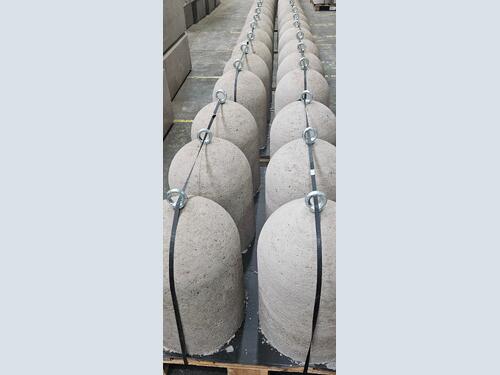
Highly visible demarcation products such as Minion-Bollards® and Jersey-Lite® barriers provide quarry managers with an effective means of defining traffic routes, creating exclusion zones, improving visibility and supporting constantly changing operational layouts.
Owen concludes, "Safety is never achieved through a single product or procedure. It comes from combining good planning, effective traffic management and practical solutions that make sites easier to understand. Clear visual demarcation helps reinforce those measures, supporting safer behaviours and reducing the potential for incidents across busy quarry environments."
While often viewed as a simple site accessory, effective visual demarcation can make a meaningful contribution to workplace safety. As operators continue to pursue the industry's goal of eliminating workplace injuries, flexible products that improve visibility, reinforce traffic management and support safe site organisation are likely to become an increasingly familiar feature across UK quarry operations.
Associated Businesses
