Cemex supports reconstruction of Pardubice castle in Czech Republic
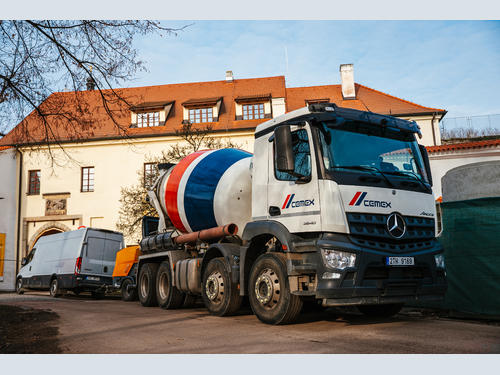
Cemex is proud to have supplied materials to a restoration project for one of the most important historical monuments in the city of Pardubice, Czech Republic.
The work at Pardubice Castle includes the restoration of the northern palace, the construction of a new visitor centre and the creation of a new natural history exhibition of the East Bohemian Museum in the former farm buildings.
Cemex is closely involved in these major modifications, including supplying cement cast screeds for the floor structures of the future natural history museum. The new ballroom is due to be completed by the end of next year, and the visitor centre and nature exhibition by 2027.
The reconstruction of floors in listed buildings such as Pardubice Castle presents a specific challenge. In the future natural history museum, it was necessary to install underfloor heating while preserving the historic character and avoiding uncontrolled cracks in the screed. The project team therefore divided the floor area into segments of a maximum size of 28 m² and applied shrinkage joints throughout the entire thickness of the screed. The gaps between the heating circuits were carefully filled with polyurethane foam.
A specialist self-levelling screed mix was prepared at the Semtín concrete plant in Pardubice, deemed ideal for interior floor constructions thanks to its high moisture resistance, optimal heat transfer during floor heating and its ability to minimise structural interference with historic structures.
Transporting the material to the castle site presented a further challenge. The nearest possible distance for the delivery of the mixer truck was 180 metres from the site. So, the use of a piston pump enabled the mix to be transported efficiently over such a distance. The application process was supervised by an experienced team of flooring engineers who ensured that the mixture was evenly spread and the correct layer height.
Proper care during the curing process was crucial to ensure the quality of the floor construction. The screed was protected from draughts, direct sunlight and low temperatures. After several weeks of curing, the surface layer was sanded and an anti-water evaporation agent was applied to ensure the long-term stability of the material.
Graham Russell, Europe Materials Vice President, Cemex commented: “It was a privilege for Cemex to be involved in such an important restoration project in the Czech Republic. The reconstruction of the Pardubice Castle successfully combines modern construction technology with an emphasis on preserving the historic character of the building. Cemex's expertise contributed to the smooth progress of the work and a quality result that will ensure the long-term functionality of the new museum space.”