From Bare Metal to Finished Component: What Actually Happens on an Industrial Coating Line


Coating a piece of metal isn't just a case of spraying some paint on it and calling it a day. Get it right, and you end up with a finish that looks good and holds up for years. Get any stage wrong, and the whole thing can fall apart, sometimes literally, months down the line. Each step in the process sets up the next, and it's really that chain of dependencies that determines whether a finished component lasts.
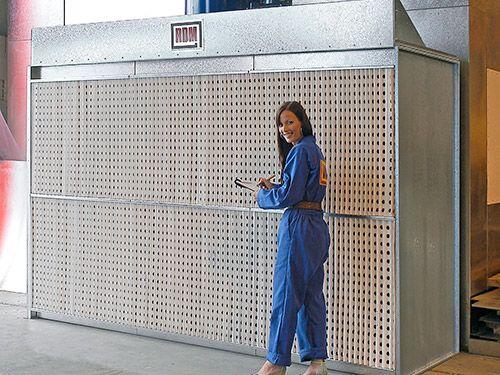
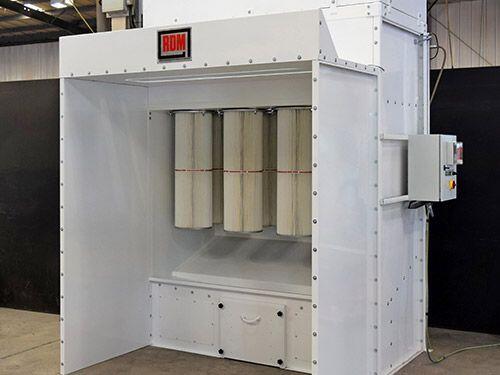
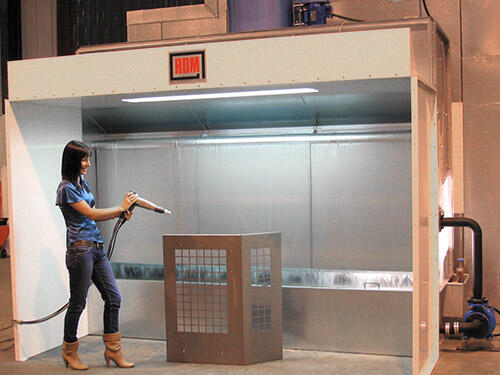
For anyone working with fabricated steel, machinery parts, enclosures or frames, a typical finishing line runs through cleaning, pre-treatment, drying, coating, curing and inspection. The actual spraying tends to happen in dedicated spray booths, where airflow and extraction can be kept under control in a way that's just not possible out on an open workshop floor.
It's worth understanding what each stage is actually doing, because that's usually how you spot where things are going wrong when a finish doesn't come out right.
- Getting the Component Ready
Before anything gets coated, the surface has to be in a fit state to receive it. Parts often turn up covered in oil, grease, dust, fabrication residue, fingerprints or rust, and none of that plays nicely with a coating.
Leave any of it on the surface and you risk adhesion problems that don't always show up straight away. A finish might look perfectly fine when it leaves the line, then start blistering or peeling a few weeks later once it's out in the real world.
So preparation might mean mechanical cleaning, washing, degreasing, or some combination of the above, depending on what the part is and what it's going to be used for.
The quality of the fabrication itself matters too. Sharp edges, weld spatter and rough surfaces can all throw off how a coating settles, so these often need sorting before pre-treatment even begins.
- Pre-Treating the Metal
Pre-treatment exists to give the coating something stable and clean to bond to.
What this actually involves depends on the metal and the coating system in use. It could mean several rounds of washing, rinsing and chemical treatment, and the approach differs quite a bit between mild steel, galvanised steel, aluminium and so on.
Done properly, pre-treatment improves how well the coating sticks and how well it resists corrosion, which matters a lot for anything that's going to face moisture, chemicals or the weather.
This is also a stage where the details really count. Chemical strength, temperature, how long the part sits in each bath, and the quality of the water all play a part. Equipment that isn't maintained can end up adding contaminants instead of removing them, storing up trouble for later stages.
- Drying Before It's Coated
Once washing and pre-treatment are done, components generally need to dry out completely before any paint or powder goes on.
Leftover moisture causes all sorts of coating defects, from patchy adhesion to an uneven finish. That's why parts usually pass through a drying oven or dedicated drying zone first.
The drying needs to be thorough right across the piece. Complicated shapes can trap water in seams, recesses or hollow sections, so there has to be enough time for it all to evaporate properly.
Temperature matters here too. A part that reaches the coating stage too hot or too cold can change how the coating behaves once it's applied.
- Applying the Coating
With preparation and drying out of the way, it's time for the coating itself.
The choice usually comes down to wet paint, powder coating or something more specialist, depending on the finish required, how durable it needs to be, how it'll look, and where it's going to end up.
Wet paint works across a huge range of materials and finishes. Powder coating, on the other hand, involves spraying electrically charged powder onto a conductive surface, then heating the part so the powder melts and forms the final coat.
Whatever method's being used, the environment around it matters. Dust and debris can get trapped in the finish, and any inconsistency in how the coating's applied shows up as variation in thickness.
Awkward shapes cause the most trouble. Corners, recesses, welds and enclosed spaces are much harder to coat evenly than a flat panel.
- Curing
Applying the coating is only half the job. It then needs to cure properly under the right conditions.
Powder coatings go through a curing oven, where heat melts the powder and lets it flow into a continuous film. Plenty of wet coatings need controlled drying or curing time too before they can be touched or moved on.
Temperature and timing are everything here. The air inside an oven isn't the same temperature as the metal itself, especially with heavier steel fabrications, so it takes longer than people sometimes expect.
Under-cure a part and the finish won't perform as it should. Over-cure it and you can run into different problems depending on the coating. That's why it's common to track both the oven conditions and the actual temperature the component reaches as it moves through.
- Cooling and Handling
Once cured, components need time to cool before anyone handles, packs or moves them on.
Touch a finish too soon and you risk marks or dents that weren't there a moment ago. So the line needs enough space and time built in between curing and whatever comes next.
Handling stays important even once everything's fully cured. Racks, hooks and lifting gear that are poorly positioned or worn can still damage a finished surface.
Really, how smoothly a job runs depends as much on how parts move through the department as it does on the coating equipment itself.
- Inspection
The last stage is checking the work.
A visual check picks up the obvious stuff: runs, uneven coverage, inclusions, surface damage. Coating thickness often gets measured too, to make sure it's within spec, and depending on the job there might be further tests for adhesion, hardness or corrosion resistance.
When something's wrong, it's more useful to work out why than just fix that one part. The real cause is often several stages back. Poor adhesion might trace back to inadequate cleaning; visible contamination might point to a housekeeping or filtration issue in the spray area.
The Line as One Process, Not Seven
None of these stages works in isolation. Good cleaning can't make up for a bad cure, and careful spraying can't fix pre-treatment that wasn't done properly.
Thinking of the whole line as one connected process, rather than seven separate jobs, tends to make it much easier to spot where things are going wrong and cut down on rejects. Regular maintenance, decent housekeeping, keeping an eye on the process and training the people running it all feed into the same outcome: a finish that holds up, part after part.