Liebherr’s hydrogen-powered wheel loader begins trial operation in port handling


- Field trial of a hydrogen-powered Liebherr large wheel loader at Georg Grube GmbH in Bremerhaven
- The L 566 H supports the daily handling of bulk goods at the fishing port
- Liebherr, Georg Grube GmbH and Green Fuels GmbH are carrying out a joint pilot project
- Hydrogen ecosystem in Bremerhaven enables a regional value chain
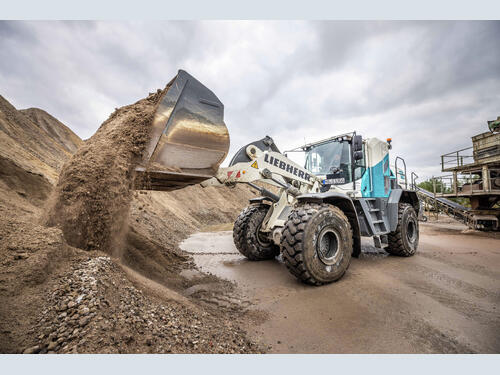
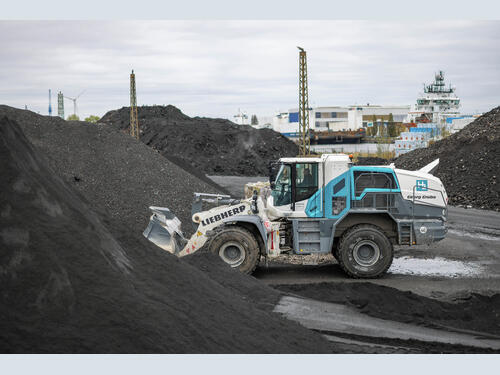
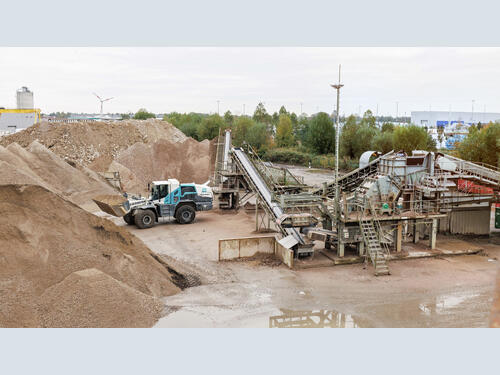
Biting wind, salty sea air and, amidst the hustle and bustle of the fishing harbour, a white-and-blue Liebherr wheel loader: in Bremerhaven, the hydrogen-powered L 566 H wheel loader prototype is commencing its field trials under real-world operating conditions. Amidst crane systems, conveyor belts and silo facilities, the machine moves large quantities of material every day and carries out tasks that were previously the preserve of conventionally powered wheel loaders. As part of a multi-year pilot project, Liebherr is supporting Georg Grube GmbH with the wheel loader in the handling of various bulk goods. The machine is thus becoming part of the growing hydrogen ecosystem in the Bremerhaven region.
“We want to be well-positioned for the future and are therefore already working on the development of various alternative drive systems. This will enable us to bring the technology best suited to each specific application to series production as soon as the market demands it. The pilot project at the fishing harbour offers ideal conditions for development: the Bremerhaven region has the necessary infrastructure to supply our hydrogen-powered machine, enabling us to test the wheel loader under real-world conditions,” reports Günther Holzer, Technical Managing Director of Liebherr-Werk Bischofshofen GmbH.
Every day, large quantities of bulk cargo are handled, stored, processed, and transported onwards. The workflows are tightly scheduled. To avoid downtime, the machines in use must deliver reliable performance at all times. Under these conditions, the L 566 H prototype can demonstrate that hydrogen proves its worth as an energy source for a large wheel loader.
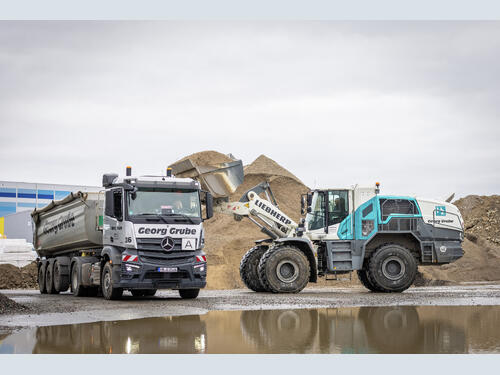
In its day-to-day operations at Georg Grube GmbH, the hydrogen-powered wheel loader feeds conveyor systems, transports sand, gravel, and rock between storage areas, and loads processed material onto lorries for onward transport. For Georg Grube GmbH, the L 566 H’s practical suitability is the key focus.
“We didn’t want to wait until production-ready products were available, but rather to play an active role in shaping the development from the very start. It was crucial for us that the hydrogen-powered wheel loader performs the same tasks just as reliably as our conventional machines – but with low emissions,” explains Wolfgang Grube, owner and managing director of Georg Grube GmbH.
A dedicated hydrogen refuelling station has been commissioned on the premises of the Fraunhofer IWES Hydrogen Lab in Bremerhaven to refuel the wheel loader. There, the wheel loader can be refuelled quickly after a shift.
Bremerhaven as a regional hydrogen ecosystem
The specific conditions in Bremerhaven provide an ideal environment for practical application. In recent years, the region has developed into an important centre for hydrogen and fuel cell technologies. Fuel cell cars, buses, and lorries are already in use here today. With the L 566 H, a hydrogen-powered wheel loader is now also expanding the range of applications away from public roads. The project is providing important insights into the use of alternative powertrains in demanding applications and demonstrates that hydrogen propulsion can, in future, represent an economically viable complementary technology to battery-electric powertrains, provided the right regional conditions are in place.
Green hydrogen, produced directly in the region, serves as the energy source within the pilot project. Wind turbines supply electricity, which an electrolyser from HY.City.Bremerhaven converts into hydrogen. The hydrogen is then transported via mobile storage solutions to the hydrogen refuelling station, where the L 566 H can be refuelled.
“With this project, we are demonstrating how a regional hydrogen value chain can work in practice. From production through to storage and transport, right through to refuelling and use in a heavy-duty machine, all the components fit together seamlessly,” explains Andreas Wellbrock, managing director of Green Fuels and initiator of HY.City.Bremerhaven.
Partnership as the key
The successful launch of the pilot project demonstrates how new technologies can be put into practice through close collaboration between industry, end-users, and regional partners. The field test of the hydrogen-powered wheel loader forms part of the ‘H2B:IMPACT’ project, the first ‘Hydrogen Valley’ in Germany to be funded by the EU and the Clean Hydrogen Partnership (CHP). Each project partner contributes their specific expertise and helps to gather valuable experience with hydrogen-powered construction machines in day-to-day use. The insights gained are intended to support the further development of sustainable propulsion solutions and open up new areas of application.
“The project demonstrates how, through the successful collaboration of ambitious partners and the integration of the hydrogen wheel loader into a hydrogen ecosystem, a functioning hydrogen value chain can already be established today. For the future market ramp-up, a network of hydrogen refuelling stations and additional vehicles are now required to ensure sufficient baseline utilisation of the infrastructure and thus enable economically viable operation. It is crucial that Europe actively seizes the opportunities offered by this technology and positions itself successfully in the face of international competition,” said the Technical Managing Director of Liebherr-Werk Bischofshofen.
Georg Grube GmbH also sees the project as an important step for the future: “We are proud to be able to contribute to the development of this innovative propulsion technology through our practical deployment and thereby make material handling more low-emission in the long term”, said Wolfgang Grube. The multi-year trial in Bremerhaven is intended to demonstrate that hydrogen can be a practical alternative to conventional propulsion systems, particularly for heavy-duty applications in material handling.
Associated Businesses
