Get More Metal Out: Smarter Separation for Higher-Value Recycling
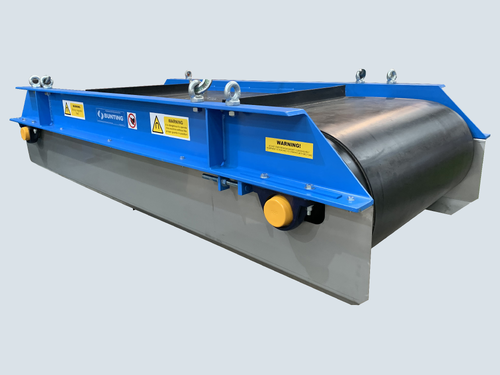
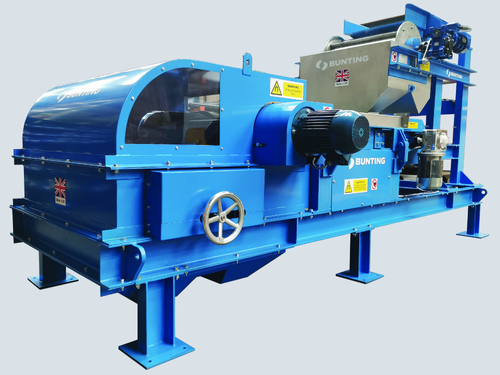
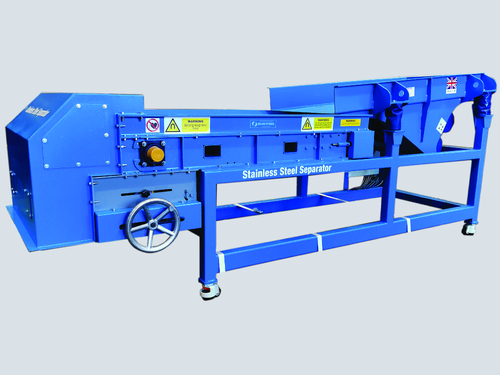


At RWM, Bunting will show how a carefully staged separation circuit can protect plant, recover more saleable metal and improve the quality of recycled materials.
For recycling operators, metal is both a problem and an opportunity. Left in the wrong stream, it can damage equipment, reduce product quality, and send avoidable value to disposal. Recovered at the right point, it becomes a saleable commodity and helps create cleaner, more consistent outputs.
The first gains start with ferrous removal
The most effective separation strategies begin by removing tramp and free ferrous metal as early as practical. Suspension and overband magnets can be positioned above conveyors to lift steel from a moving burden, while magnetic head pulleys provide continuous extraction at the discharge point. These stages protect crushers, shredders, and screens, reduce unplanned downtime, and prepare the remaining material for more precise downstream separation.
Where material characteristics, burden depth, or throughput make the application more demanding, the magnetic system must be selected around the real process rather than a catalogue label. Field strength, reach, belt speed, installation height, and the shape of the feed all affect performance. A well-chosen first stage creates stable feed conditions that allow every later stage to work harder.
Recovering the non-ferrous value
Once ferrous metal has been removed, eddy current separation opens the door to valuable non-ferrous recovery. A high-speed magnetic rotor induces electrical currents in conductive particles, producing a repulsive force that throws metals such as aluminium, copper, and brass away from the main material trajectory. The result is a clean, continuous separation without physical picking.
Performance depends on more than magnetic intensity. Consistent feeding, a controlled burden depth, suitable particle size and a clear material trajectory at the splitter are all essential. When those conditions are designed into the line, an eddy current separator can turn a mixed fraction into distinct, marketable outputs and reduce the metal content carried into subsequent processing.
For finer or more complex fractions, electrostatic separation adds another route. By exploiting the different electrical behaviour of conductive and non-conductive particles, electrostatic separators can help recover metal from plastics and other mixed materials where colour, density or conventional magnetic response alone is not enough.
The stainless-steel challenge
Stainless steel is often one of the most frustrating losses in a recycling plant. Many stainless grades are only weakly magnetic, while shredding and work hardening can change their magnetic response. Fragments may pass conventional magnets and remain with the product, reducing quality and leaving valuable metal behind.
Bunting Stainless Steel Separators are designed to target this difficult fraction. Used after the main ferrous and non-ferrous stages, they can recover weakly magnetic stainless pieces that would otherwise be missed. The benefit is twofold: a cleaner end product and another concentrated metal stream for sale or further refining.
A separation circuit, not a single machine
The best results rarely come from treating each separator as an isolated purchase. Suspension magnets, magnetic head pulleys, electro drum magnets, eddy current separators, stainless steel separators and electrostatic systems each address a different part of the material stream. Their order, operating window, and interaction determine the overall recovery rate.
That is why the starting point should always be the application: feed composition, particle-size range, moisture, throughput, belt width, available space, and the specification required for each output. Understanding those variables makes it possible to identify where metal is being lost, where contamination is entering the process, and which separation stage will deliver the greatest return.
Meet the separation specialists at RWM
Bunting will be exhibiting at RWM on stand ME-E254, where the team will be available to discuss how magnetic, eddy current, stainless steel and electrostatic separation technologies can improve metal recovery and product purity. The conversation will focus on the practical details that determine performance and on identifying the most effective sequence of separation stages for each application.
Operators, plant designers and equipment manufacturers are encouraged to bring the facts behind their separation challenge: the material being processed, the metals to be recovered, typical particle sizes, throughput, current equipment and the quality target for the final product. Even when the answer involves more than one technology, the conversation can establish a logical separation sequence and the next steps for evaluation.
The message at RWM is simple: get more metal out, protect the plant, and turn mixed material into higher-value resources. Meet the Bunting team on stand ME-E254 or visit www.buntingmagnetics.com to start the discussion.
Associated Businesses